PPE field note
Why I Stopped Buying the Cheapest Safety Gear (and What It Cost Me First)
Posted on 2026-10-26 by Rodrigo Salazar
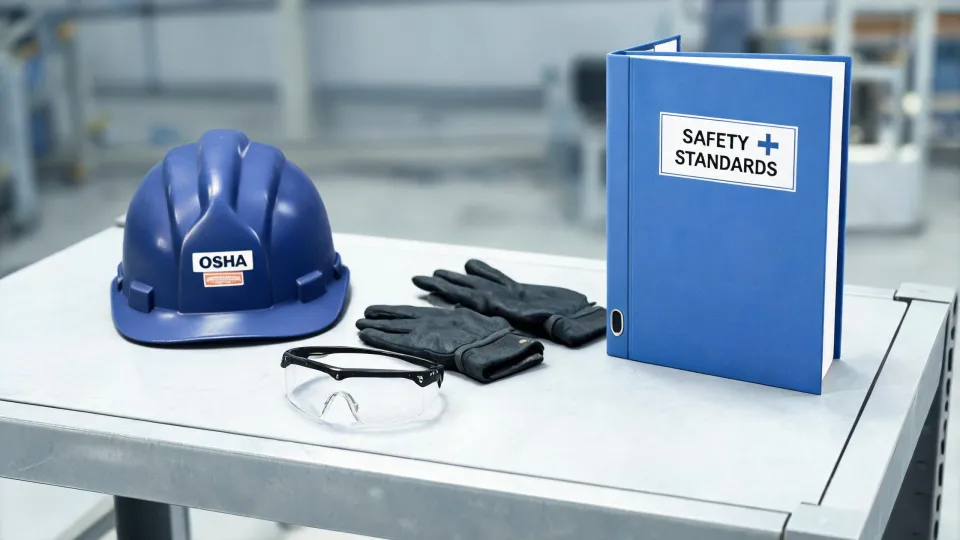
I run procurement for a 240-person company — about $180,000 a year across 13 vendors, most of it safety supplies for our shop floor and warehouse. I report to operations and to finance. After five years of doing this, here is the view I've landed on: in safety products, the lowest unit price is almost never the lowest actual cost. Not "sometimes it isn't." Almost never.
I didn't start here. I started as the person who found a $22 head harness for $13 and called it a win. It took me three budget cycles and roughly 80 purchase orders to understand that a cheap part that fails a fit test is a $180 refund request followed by a $300 replacement order.
Exhibit A: The Honeywell Pro N100 mess
Two years ago our shop floor ran on Honeywell Pro N100 half-mask respirators. Nothing fancy, but every unit was fit-tested and every worker had been trained on the same cartridge installation. Then a department manager found a "compatible" strap-and-valve kit at a lower price and ordered it without telling me. No documentation, no manufacturer tech sheet — just a plastic bag with an SKU.
Here's what made it worse: the box had no instructions. So when workers started asking how to install the cartridges, someone Googled the Honeywell Pro N100 installation manual and pulled a PDF for a different generation of the mask. Different cartridge orientation. You can guess the rest.
Fit test failures that month: 11 out of 18. (Should mention: we only caught them because our safety officer re-ran the tests after the first complaint, not because anyone flagged the packaging.)
Cost of the "savings": about $1,900 up front. Cost of the recovery: 11 failed fit tests at $180 each in lab time, two partial shift shutdowns while we re-sourced the correct units, and a corrective action plan I had to present to our VP. I should add that the whole thing surfaced within a week — if it had happened during a slow quarter, I might still be answering questions about it.
That's the part people don't see on a price comparison: the installation manual, the fit-test data sheet, the lot number on the box. Those aren't "extras." They're the reason you can use the product legally in the first place.
Exhibit B: The KKB610 price tag
Before we moved to Honeywell KKB610 prescription safety glasses, our maintenance guys were buying $12 generic safety glasses and wearing them over their prescription frames. Sometimes. The rest of the time they had them hooked on their collar.
$85 per pair for the KKB610 felt like a luxury item when the request came in. What I looked at instead was the wearing rate our safety lead was tracking: about 60% of the shop, on a good day. After we issued the KKB610 with each worker's actual prescription, that number jumped past 95%.
The price difference is real and I'm not going to pretend it isn't. But a $73 price delta only looks expensive next to a $12 pair that nobody wears. Once you divide the cost over the number of shifts the glasses actually get used, the picture flips. I should mention: my numbers are from one shop floor and about 30 pairs. If you're outfitting a cleanroom, your cost-per-wearing math changes a lot — that's one I can't speak to.
Exhibit C: Expired respirators and the noise
Last month our facilities lead brought me a sealed case of respirators from 2021 and asked if we could still use them. "They're sealed," he said. "Someone online said the date is arbitrary."
Then he said something I can't make up: "It's like in Arc Raiders — you find a gas mask and it's fine."
I had to look that up. He was referring to the survival game, where salvaged respirators are an inventory item. That's the level of noise we're dealing with: a search for expired respirator guidance and a video-game wiki show up in the same results page.
Per NIOSH and OSHA guidance, an expired respirator should not be trusted for any exposure where protection matters. Elastomer parts degrade, exhalation valves stiffen, head harnesses lose tension. Let me rephrase that: the sealed bag protects the packaging, not the rubber. The lot number on that case was 2021 — four years past the manufacturer's rated shelf life.
I'm not saying expired units are radioactive. I'm saying that "is this still rated for the hazard" is not a question a procurement person should be answering from a search results page. That's the real hidden cost of cheap sourcing: you inherit the research burden.
Exhibit D: The Loop earplugs controversy (and what it isn't)
Our open-plan office asked for noise-reducing earplugs last fall. Someone suggested Loop, and someone else immediately said "isn't there a controversy?"
So I spent an afternoon reading about the Loop earplugs controversy. Here's the honest summary: most of it is about marketing claims and consumer expectations, not about products failing in their rated use. Loop is a consumer product. It's good at what it's for. It isn't sold as industrial hearing protection, and if you buy it expecting an NRR-rated hearing conservation device, you'll be disappointed — then you'll review it, and that review becomes part of the "controversy."
Per FTC advertising guidance (ftc.gov), health and safety claims have to be truthful, substantiated, and not misleading. "Reduces noise" in a consumer context and "NRR 25 dB" in an industrial context are two different claims, and neither one is dishonest — they're just aimed at different markets.
We ended up buying an NRR-rated plug for the shop floor and a consumer pair for the office. The industrial pair cost about $14 more per set. Nobody has researched a controversy since.
Exhibit E: "Can I use nitrile gloves for food prep?"
This one comes up every time we host an on-site event or restock the breakroom — and yes, I have absolutely searched can I use nitrile gloves for food prep at 11pm the night before a client lunch.
The short answer: nitrile is an acceptable material for food contact — but "nitrile" on its own is not a certification. The glove has to be food-grade and used under its rated conditions. A box of 3-mil industrial nitrile certified for auto and janitorial work is not the same product as food-contact nitrile.
We learned that the expensive way: a shipment of uncertified gloves arrived for a catered event, the visiting food-safety inspector flagged it, and we had to shut down the lunch service for four days. Roughly $130 a day in catering credits — plus the conversation with a client about why their buffet was cancelled.
After that we switched to a supplier that ships a food-contact declaration with every case. Cost increase: about 8%. Rework required: zero.
"But our budget is tight"
I hear this every quarter, and it's a fair objection. Here's the honest answer I give back: we can absolutely reduce the invoice. We just can't reduce the invoice and the total cost at the same time.
Most of the extra spend we've tracked has come from one of four places:
- Re-ordering because the first order was the wrong product, spec, or product generation.
- Rework, retesting, or retraining because documentation was missing.
- Compliance or inspection costs from a product that wasn't rated for the environment.
- Workers not wearing the item because the fit or the prescription was wrong.
None of those four things show up in a unit price. All of them show up in a cost per wearing. If you want to know why some of us defend the higher-priced item, that's the reason — not because of the brand name, and not because we're careless with the budget.
Where I landed
If you're a buyer choosing between a cheap safety item and a pricier one with real documentation, here's the question I'd ask: which one can I defend if someone gets hurt? Not which one has the better price. Not which one has the better reviews. Which one can I hand to an auditor, an inspector, or a lawyer without needing to guess.
That's why I stopped buying the cheapest option. It took three years and a lot of paperwork to get here. I wish it had taken less.

Rodrigo Salazar
Rodrigo Salazar is a fall-protection analyst specializing in full-body harnesses, energy-absorbing lanyards, self-retracting lifelines, anchorage connectors, rope grabs, horizontal lifelines, and rescue kits. He applies ANSI Z359.11, ANSI Z359.14, EN 361, and EN 360 while evaluating arrest force, clearance, free-fall distance, deceleration distance, gate strength, connector compatibility, user capacity, leading-edge performance, inspection criteria, and rescue time. His guides help construction managers, tower crews, utilities, engineers, and buyers design complete systems around anchor location, mobility, swing-fall exposure, equipment compatibility, inspection burden, and post-arrest recovery.
Leave a Reply