PPE field note
How I Wasted $3,200 on Safety Gear Before Learning the Real Lesson About Specialization
Posted on 2026-07-23 by Jane Smith
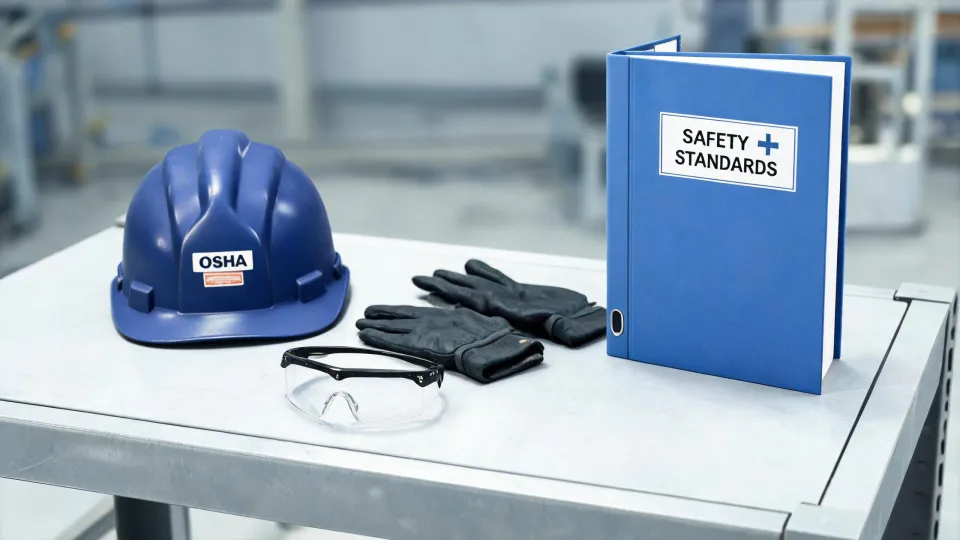
Let me start with the figure that still stings: $3,200. That's what a single misguided order cost us in 2022 – plus a two-week delay that nearly lost a client.
I'll spare you the dramatic setup. If you're responsible for sourcing safety equipment at a plant, a construction site, or an industrial facility, you've probably made some version of my mistakes. Here's the thing: most of my errors weren't about picking the wrong brand. They were about assuming one supplier could do everything well.
The Order That Broke Me
In September 2022, I submitted a consolidated order for a new warehouse expansion. Included: 200 pairs of general-purpose gloves, 50 hard hats, 30 smoke detectors, and 12 pairs of Lacrosse rubber boots for the outdoor loading crew. Simple, right?
Except I made three critical errors in that single purchase order. Let's break them down.
Mistake #1: Assuming Smoke Detectors Are Commodities
They're not. I learned the hard way that commercial smoke detectors have different fire ratings, compatibility requirements with existing alarm panels, and code compliance issues that residential units don't. The ones I ordered were technically smoke detectors – they listed UL 217 on the box. But our local fire marshal flagged them during inspection because they weren't listed for the specific occupancy type.
That mistake cost us $890 in redo (removing, replacing, re-certifying) plus a 1-week shutdown delay. The vendor I bought them from? A general safety distributor who didn't specialize in fire alarm systems. They sold me what was on the shelf, not what was code-compliant for our use case.
Mistake #2: Ignoring the Legal Side of Pepper Spray
We needed pepper spray for our site security team. I'd read somewhere that it was legal to carry in most states. What I didn't check: is pepper spray legal in California? (Spoiler: yes, but with restrictions on canister size, concentration, and labeling.) The case I ordered had a 2.5 oz canister – California limits pepper spray to 2.5 oz for personal use, but there are additional rules about requiring a safety hood and not shipping to certain zip codes.
Everything I'd read about pepper spray legality assumed general knowledge. In practice, for our specific county in California, we needed a permit for security personnel to carry it on private property. I didn't know that until after the shipment arrived. Result: $450 wasted on non-compliant units, plus a compliance headache I'm still dealing with.
Mistake #3: The Lacrosse Rubber Boots That Didn't Fit
Lacrosse rubber boots are excellent – I've used them myself for years. But here's the thing: they're made for specific environments. The ones I ordered were standard-duty, uninsulated boots. Our crew works outdoors in a cold, wet climate with occasional chemical spills. What they actually needed were Lacrosse's chemical-resistant, steel-toe, insulated models – a completely different product line.
Why didn't I specify correctly? Because I assumed the supplier would ask the right questions. They didn't. They processed my order, shipped standard boots, and by the time I realized the mismatch, the return window had closed.
Add it up: $3,200 in wasted product, shipping, and labor – plus credibility damage with my operations team. The boots sat in a storeroom for six months before we donated them.
What I Learned: The Specialization Trap
It took me three years and about 150 orders to understand a fundamental truth: the best supplier for one product is rarely the best for everything.
Conventional wisdom in procurement says to consolidate vendors for better pricing and simpler management. My experience suggests otherwise: relationship consistency beats marginal cost savings – but only when the vendor truly specializes in what you need.
Take Magid Glove & Safety, for example. They're a manufacturer and distributor of personal protective equipment (PPE): gloves, safety glasses, hard hats, coveralls, safety shoes, respirators, hearing protection, and related accessories. That's their core. For those product categories, they have deep expertise, in-house manufacturing, and quality control that comes from decades of specialization.
But should you buy smoke detectors from the same company that sells you gloves? Probably not. That's not their sweet spot. Likewise, Lacrosse rubber boots – while Magid may carry them – the real expertise lies with a distributor who knows the nuances of boot fit, chemical resistance standards, and job-specific features. A good supplier will tell you: "This isn't our strength – here's who does it better."
The Cost of Ignoring Boundaries
I still kick myself for not asking the right questions upfront. If I'd separated the order by specialty – PPE from a PPE specialist, fire safety from a fire safety vendor, footwear from a footwear expert – I'd have avoided all three mistakes.
Here's the breakdown of what that $3,200 really cost:
- Direct waste: $1,340 in non-returnable products
- Labor: $800 in staff time for research, returns, and re-ordering
- Delays: 2 weeks of project slowdown worth ~$1,000 in overhead
- Compliance risk: Potential fines for the smoke detector and pepper spray issues (fortunately avoided)
Total: $3,200+ in realized cost, plus intangible reputation damage.
A Better Approach: The Pre-Check List
After the third rejection in Q1 2024, I created our team's pre-check list. It's simple – five questions we run before every order:
- Is this product's primary category within this supplier's core specialization? (If not, consider a specialist.)
- What regulations apply to this product's use in our state/county? (Check official sources – don't trust blog posts.)
- Does the product need a specific certification for our industry? (e.g., NFPA for fire, ANSI for PPE, California Code of Regulations for pepper spray.)
- Have we verified product specifications with the end user? (Don't assume – ask the person who will wear the boots.)
- Is the supplier willing to say "this isn't our best fit"? (If they say they can do everything, be suspicious.)
In the 15 months since implementing this list, we've caught 47 potential errors – at least half of which would have resulted in similar waste. The list saved us an estimated $12,000 in avoided mistakes.
The Bottom Line
I'm not saying you should never buy Magid products for your PPE needs – they're excellent for gloves, glasses, and other core safety gear. I'm saying know your supplier's boundaries. The vendor who says "this isn't our specialty – here's who does it better" earns my trust for everything else.
Similarly, when you need Lacrosse rubber boots for a specific job, find a footwear specialist who can help you select the right model. When you need smoke detectors for a commercial building, work with a fire protection company. And when you ask "is pepper spray legal in California" – don't take a distributor's word for it. Verify with the California Department of Justice directly.
Prices as of March 2025; verify current rates and regulations with official sources.

Jane Smith
I’m Jane Smith, a senior content writer with over 15 years of experience in the packaging and printing industry. I specialize in writing about the latest trends, technologies, and best practices in packaging design, sustainability, and printing techniques. My goal is to help businesses understand complex printing processes and design solutions that enhance both product packaging and brand visibility.
Leave a Reply