PPE field note
The Hidden Costs of Cutting Corners on PPE: A $4,800 Lesson in Buying the Wrong Safety Gloves
Posted on 2026-07-21 by Jane Smith
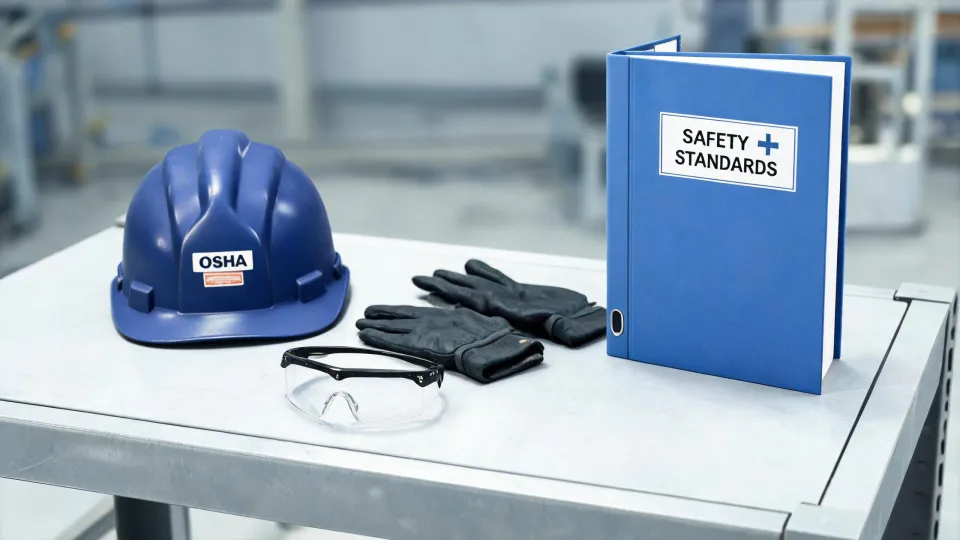
I learned a $4,800 lesson last year. That's the amount a single wrong order of safety gloves cost my company. Not in the initial invoice, but in reorders, downtime, and one seriously frustrated warehouse manager. The kicker? The gloves I bought were $0.80 cheaper per pair than the ones from Magid I should have ordered.
Let's dive into why this is such a common trap, and how thinking about the total cost of your PPE changed everything for our team.
The Problem: The $0.80 Price Tag Trap
It starts simply enough. You get three quotes for cut-resistant gloves. Vendor A is a no-name brand at $2.20 a pair. Vendor B is a well-known giant at $3.50. Vendor C is Magid, at $3.00. The budget is tight, so you test a sample from Vendor A. They feel okay. The spec sheet looks fine. You place an order for 600 pairs. That's a saving of $480 over Magid. Feels like a win.
I made this exact call in February 2024. Everything I'd read about PPE procurement said to "get the best price." The conventional wisdom is that a glove is a glove. In practice, I found the opposite was true. The $2.20 gloves didn't last. Our workers, who handle sharp metal edges daily, were going through them in 3 days instead of the 6 days we expected. That doubled our usage rate. Suddenly, that "savings" vanished.
The Deep Cause: What We Missed on the Spec Sheet
The surface issue was price. The deeper issue was that we didn't understand the real performance metric. The spec sheet said "ANSI A5 cut level." That's the same as the Magid pair. But the Magid gloves had a superior grip pattern and a longer cuff. Our crew was working with oily parts. The cheap gloves slipped. The shorter cuff meant more wrist injuries from debris. The grip issue alone led to workers dropping parts, damaging inventory, and slowing down.
I hadn't calculated the cost of reduced productivity or increased scrap. The $0.80 saving became a hidden $6.00 liability per worker per week. I only saw this after our production manager blew up at me during a morning meeting.
The Cost: More Than Just Money
Here's what the spreadsheet didn't show:
- Reorder frequency doubled: More orders, more shipping fees, more admin time.
- Worker dissatisfaction: The gloves were uncomfortable. People started taking them off to work faster, leading to a near-miss hand injury.
- Rejection rate: In my first year (2017), I made the classic mistake of ordering a glove that checked every box for specs but had a stiff liner. The crew rejected them. 600 pairs, straight to the trash. That was $1,320 gone.
"Productivity loss and injury risk aren't line items on a PO. They're the real costs that eat your budget from the inside."
Our mistake affected a $3,200 order, and the total waste—including my time and the team's frustration—was closer to $4,800 when you factor in the rush order for the correct Magid gloves and the lost productivity.
The Fix (It's Simple)
I don't buy gloves on unit price anymore. I now calculate Total Cost of Ownership (TCO) before comparing any vendor quote. It's not complicated. For a key product like our primary work glove, it looks like this:
- Price per pair +
- Expected lifespan (adjusting for actual use) +
- Shipping per order +
- Cost of a reorder cycle +
- Risk score (history of quality issues)
When I ran this formula on the Magid gloves vs. the cheap ones, the Magid pair was actually 14% cheaper over a 12-month period. Because they lasted longer and the workers preferred them, they didn't get replaced early. The $3.00 pair was a better deal than the $2.20 pair.
I still use Magid for our core safety glasses and hard hats for the same reason. Their in-house manufacturing means consistent quality. Their product line is deep enough that I can spec a glove that perfectly fits the task, not just a generic catalog model.
Bottom line? The cheapest PPE almost always becomes the most expensive. My $4,800 mistake taught me that. Now, our team has a checklist that includes field-testing the product for a week and a TCO calculation. We've caught 47 potential errors using this checklist in the past 18 months.
So, when you're looking at that price column, remember: a glove that costs $0.80 less can cost you $4,800 more. Choose based on the total cost, not the sticker price.
My experience is based on about 200 mid-range PPE orders for a 50-person metal fabrication plant. If you're dealing with chemical or bio-hazard situations, your spec requirements will be different, but the TCO principle still applies.

Jane Smith
I’m Jane Smith, a senior content writer with over 15 years of experience in the packaging and printing industry. I specialize in writing about the latest trends, technologies, and best practices in packaging design, sustainability, and printing techniques. My goal is to help businesses understand complex printing processes and design solutions that enhance both product packaging and brand visibility.
Leave a Reply