PPE field note
Which Safety Goggles Are Right for Your Team? A Quality Inspector's Guide
Posted on 2026-07-20 by Jane Smith
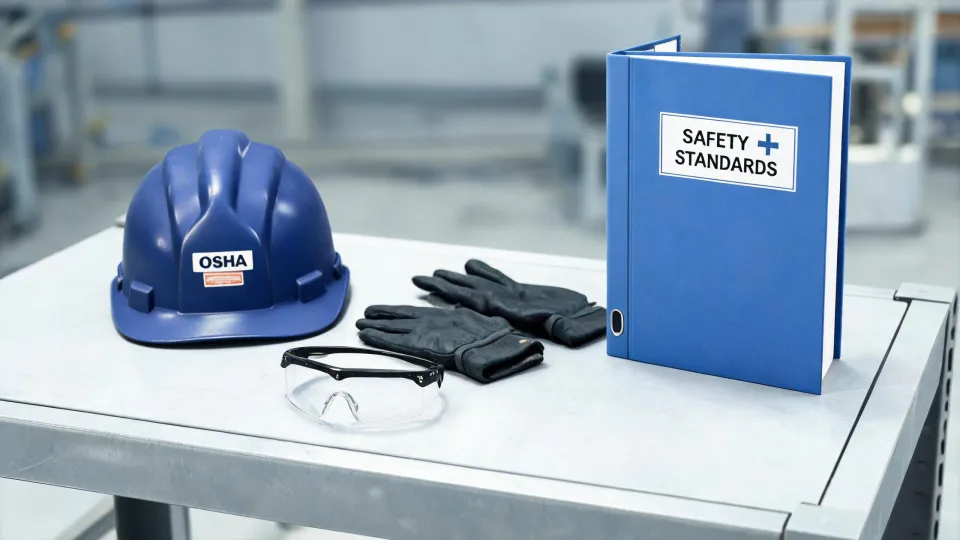
There is no 'best' safety goggle. Only the right one for your job.
I've been a quality compliance manager in the PPE industry for over four years. Every quarter, I review roughly 200 unique SKUs—gloves, glasses, hard hats, you name it—before they go out to our customers. And if there's one question I hear more than any other, it's this: "Which safety goggle should I buy?"
The honest answer? It depends. There is no universal 'best' goggle. What works for a chemical plant won't work for a construction site, and what works for a construction site might be overkill for a warehouse. So let's break this down by scenario—because your team's safety depends on getting this right.
Scenario A: The General Purpose Shop Floor (Impact & Dust)
This is the most common scenario. You're managing a factory floor, a mechanics shop, or a warehouse. The primary hazards are flying debris (from grinding, cutting, or drilling) and airborne dust. You don't need a hermetically sealed system; you need something that's comfortable enough to wear all day and tough enough to stop a stray shard.
For this, I'd recommend a direct-ventilation goggle. These have small vents built into the frame that allow airflow—reducing fogging, which is a major comfort issue—while still meeting ANSI Z87.1 impact standards. Look for a model with a polycarbonate lens and a soft, flexible PVC frame.
- Key specs: ANSI Z87.1+, anti-fog coating, adjustable headband.
- Price range (as of Q1 2025): $4–$8 per unit for basic models from reputable manufacturers. I've seen bulk pricing drop to under $3 for orders of 500+.
- What to watch for: Ventilation style. Too much venting can allow fine dust in; too little will fog up. I've rejected batches where the vent design was more cosmetic than functional.
Our team once received a shipment of 10,000 units where the anti-fog coating was visibly uneven—patchy under our light box inspection. The vendor claimed it was 'within spec,' but our standard requires 100% uniform coating. We rejected the lot. That cost us a two-week delay, but it saved our reputation.
Scenario B: The Chemical & Splash Zone (Liquids & Vapors)
Now we're talking about labs, chemical processing plants, or any area where workers are exposed to liquid splashes, mists, or corrosive vapors. This is a completely different ballgame. A standard vented goggle won't cut it—chemicals can seep through the vents.
Here, you need an indirect-vent or non-vented chemical splash goggle. The frame includes a baffled venting system that allows air circulation without letting liquid in. For high-risk environments (acids, solvents), a non-vented goggle is safer.
- Key specs: ANSI Z87.1+ (D3 for chemical splash), PVC or silicone frame, anti-fog, often with a scratch-resistant coating.
- Price range (as of Q1 2025): $8–$20 per unit. Silicone frames are pricier but last longer and resist chemical degradation better than PVC.
- What to watch for: Compatibility with respirators. If your team is also wearing half-face respirators, you need a goggle that doesn't create a pressure point on the seal. I've seen this cause compliance issues—workers remove the goggle because it's uncomfortable, compromising safety.
"This gets into OSHA compliance territory, which isn't my specific expertise. I can tell you from a quality perspective that verifying the D3 rating on the packaging is step one. For specific chemical resistance data, consult the manufacturer's chemical compatibility chart."
I once assumed that a 'splash-rated' goggle from a new vendor would meet our internal standards. Didn't verify. Turned out their 'indirect vent' was a tiny channel that still let water through during our test spray. We sent the sample back. Now every new vendor supplies a test sample for physical verification before we place a bulk order.
Scenario C: The Tactical & Security Environment (CS Gas & Pepper Spray)
This niche scenario came up recently because of a keyword in our product line: CS gas vs pepper spray. If your team works in security, corrections, or law enforcement, you need to think about protection against chemical irritants, not just physical impact or industrial chemicals.
CS gas (a tear gas) and pepper spray (OC, or oleoresin capsicum) are both incapacitants, but they work differently. CS gas is a fine powder that irritates the eyes and respiratory system. Pepper spray is an oily liquid that causes immediate, intense pain. The right goggle for one might not be perfect for the other.
- For CS gas: A sealed, non-vented goggle is critical. The fine particles can penetrate small gaps. A foam-lined frame offers a better seal.
- For pepper spray: The oily nature of OC can degrade certain plastics. A goggle with a polycarbonate lens and a silicone or thermoplastic rubber (TPR) frame is more resistant. A non-vented goggle is still preferred, but some indirect-vent designs can work if the vents are tightly baffled.
- Common failure: I've seen security teams use standard impact goggles for pepper spray training. The result? The spray seeps in through the vents, and the trainee is incapacitated. That's a training failure—and a safety incident.
Price range (as of Q1 2025): $15–$35 per unit for tactical-grade models. These are more specialized, so volumes are lower and prices are higher. For a 50-unit training order, don't cheap out.
How to figure out which scenario you're in
Here's a simple way to check: walk your facility and look at one job station. What is the worker doing? If they're grinding metal, Scenario A. If they're pouring a liquid from a beaker, Scenario B. If they're conducting a drill with a smoke agent or OC spray, Scenario C. If they're doing all three (rare, but possible), you need multiple goggle types.
My practical advice? Buy a sample of three different models (one from each category) and run a blind test with your team. Let them wear each for a full shift. You'll get immediate feedback on comfort and fogging. On a 50-person shift, spending $60 on samples can save you thousands on a bulk order of the wrong product.
The goal isn't to find the 'best' goggle in the catalog. It's to find the one your team will actually wear consistently—because the best safety equipment in the world does nothing if it's sitting in a locker.

Jane Smith
I’m Jane Smith, a senior content writer with over 15 years of experience in the packaging and printing industry. I specialize in writing about the latest trends, technologies, and best practices in packaging design, sustainability, and printing techniques. My goal is to help businesses understand complex printing processes and design solutions that enhance both product packaging and brand visibility.
Leave a Reply