PPE field note
Why Your PPE Costs More Than You Think (And What to Do About It)
Posted on 2026-07-24 by Jane Smith
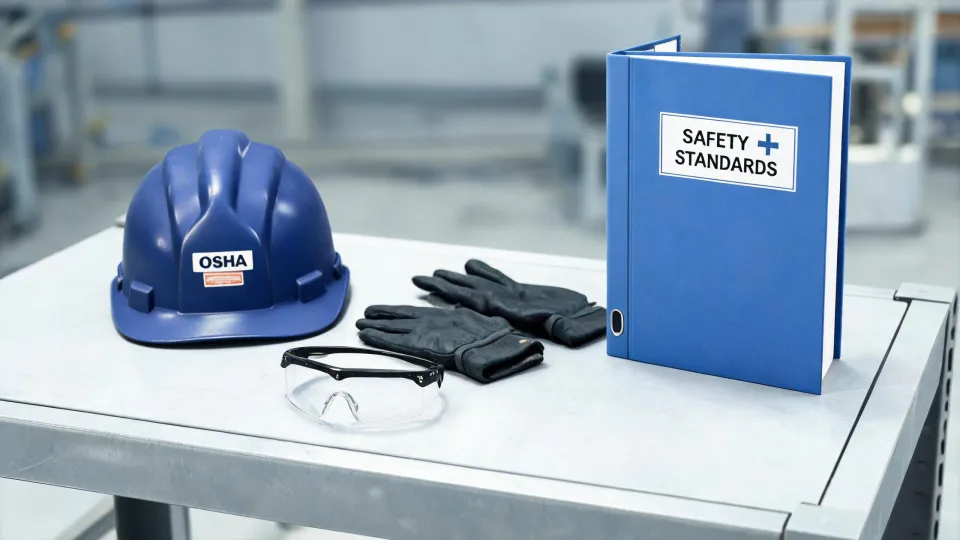
I Thought I Was Saving Money
Last year, I approved a $3,200 order for nitrile gloves. The quote was the lowest I'd seen. The sales rep was friendly. The samples looked fine.
Three weeks later, we had a problem. Actually, 5 cases of problems—the gloves were undersized. Three workers reported tears during handling. Two more complained about allergic reactions (which I later learned were from an unlisted accelerator). We had to reorder from another supplier at 2-day rush pricing.
Total cost of that "savings"? About $890 in reorder fees, 40 hours of wasted labor, and a hit to my department's credibility. Not ideal.
Here's the thing: that mistake taught me a lesson I should have learned years ago. In PPE procurement, the unit price is just the entry fee. The real cost is everything else.
The Real Problem: We're Trained to Compare Unit Prices
Most procurement systems are designed to make unit price comparison easy. You open three quotes, line up the per-box costs, pick the lowest. Done. That's how I was trained, and that's what most B2B buyers do.
But here's what that system misses: the cost of a wrong decision isn't captured in a spreadsheet column. It shows up later, in ways that don't hit the purchase order but do hit your budget.
I'm not saying budget options are always bad. In my experience, they're just riskier—and risk has a cost.
The Hidden Costs Nobody Tracks
Looking back at my mistake (and the 47 other errors I've documented over the past 18 months—yeah, I keep a list), I've identified 5 categories of hidden cost that routinely exceed the unit price difference:
- Return and reorder fees: The $50 you save on a case of gloves can turn into $200 in restocking plus rush shipping when they don't fit.
- Worker productivity loss: Ill-fitting PPE slows workers down. A 2% productivity slip on a 20-person shift costs more than most PPE markups.
- Compliance risk: One rejected OSHA audit or safety incident linked to subpar gear can cost thousands in fines and lost time.
- Supplier relationship damage: Constantly switching to the lowest bidder makes you a price shopper, not a partner. Good suppliers give priority to partners, not shoppers.
- Decision fatigue: Every "savings" that backfires makes you second-guess future decisions. That mental overhead has real cost.
People think expensive suppliers deliver better quality because they overcharge. Actually, suppliers who deliver consistent quality can charge more because they've eliminated the hidden costs. The causation runs the other way.
How I Now Calculate True Cost
Honestly, I'm not sure why this framework isn't taught in procurement 101. My best guess is that it's because unit pricing is easy to measure, and TCO is hard. But here's my rough formula:
True Cost = Unit Price + (Rejection Rate × Replacement Cost) + (Non-compliance Risk × Estimated Fine) + (Productivity Impact × Hourly Rate × Hours Affected)
I use a simpler version for quick comparisons:
- A-grade supplier: Price × 1.1 (includes premium)
- B-grade supplier: Price × 1.3 (accounts for expected issues)
- C-grade supplier: Price × 1.5 (high risk of hidden costs)
This is a rough rule of thumb. Don't hold me to exact numbers—they vary by product and context. But the principle holds: the cheapest quote is rarely the cheapest total cost.
What This Means for Magid Customers (Or Anyone Buying PPE)
I've been handling PPE procurement for about 7 years now. In that time, I've worked with vendors ranging from small importers to major manufacturers. The total cost thinking applies everywhere.
Magid's advantage, from what I've seen, isn't that their unit prices are the lowest. It's that they manufacture in-house and offer a comprehensive product line. That means:
- Fewer middleman markups
- Consistent quality across product categories
- Expert support when you have questions (I've called their team more than once)
According to Magid, their in-house manufacturing allows them to control quality and reduce lead times. In my experience, that kind of control translates into fewer hidden costs.
Total cost of ownership includes: Base product price, setup fees (if any), shipping and handling, rush fees (if needed), and potential reprint or replacement costs (quality issues). The lowest quoted price often isn't the lowest total cost.
My experience is based on about 200 mid-range orders across warehouse, construction, and lab settings. If you're working with heavy industrial or specialized chemical environments, your experience might differ significantly.
The Bottom Line
I'm not here to sell you on Magid—there are plenty of good suppliers out there. What I am here to say is this:
Stop comparing unit prices alone. Calculate total cost. Include the hidden stuff. And if a quote seems too cheap, ask yourself what's not being included.
That $3,200 order I mentioned? The "cheaper" gloves ended up costing about $4,100 all-in. The original quote I passed over was $3,800 from a reputable manufacturer. The $600 premium would have saved us $900 in headaches. A lesson learned the hard way.
Prices as of March 2025; verify current rates with suppliers.

Jane Smith
I’m Jane Smith, a senior content writer with over 15 years of experience in the packaging and printing industry. I specialize in writing about the latest trends, technologies, and best practices in packaging design, sustainability, and printing techniques. My goal is to help businesses understand complex printing processes and design solutions that enhance both product packaging and brand visibility.
Leave a Reply