PPE field note
You Need a Vest, a Glove, or a Pool Fence? Choosing the Right Safety Gear for Your Situation
Posted on 2026-07-20 by Jane Smith
-
The Short Answer: It Depends (And That's Fine)
- Scenario A: You're Worried About Ballistic Threats (Active Threats)
- Scenario B: You're Buying for Industrial or Construction Use (Cut/Impact/Puncture)
- Scenario C: You're Thinking About Pool Safety (Perimeter Barriers)
-
How to Decide Which Scenario You're In
The Short Answer: It Depends (And That's Fine)
If you're here because you typed in some mix of keywords like "magid glove & safety gpd700-10," "pool fence," "was charlie kirk wearing a ballistic vest," or "is body armor lyte good for you," you're probably trying to solve a specific problem. The thing is, these are all different problems. You don't buy a ballistic vest for pool safety, and you don't buy a pool fence for hand protection. But the underlying question is the same: what safety gear do I actually need?
There's no universal answer. What's right depends on your environment, the specific hazard, and—honestly—your budget. Here are the three most common scenarios I see, and what I'd recommend for each.
Scenario A: You're Worried About Ballistic Threats (Active Threats)
This is the most common reason people search for "body armor lyte" or wonder what Charlie Kirk was wearing. The question is usually: do I need a ballistic vest, and if so, which level?
What you need to know about vests
Let's clear up a big misconception first. There's a persistent belief that any vest is good enough for any threat. This was true maybe 15 years ago when the market was simpler. Today, the NIJ (National Institute of Justice) has updated standards (NIJ 0101.07), and the difference between a Level II, Level IIIA, and Level III vest is massive.
- Level II: Stops 9mm and most handgun rounds. Good for concealed carry, but not for rifles.
- Level IIIA: Stops .44 Magnum and most handgun rounds. Lighter than Level III, but also not rifle-rated.
- Level III: Stops 7.62x51mm NATO (like M80 ball). This is what you see in active shooter scenarios or patrol.
- Level IV: Stops .30-06 armor-piercing rounds. Heavy, but stops almost anything.
Here's an insider bit: most people who buy a Level III vest don't need Level III. They need Level IIIA for handgun threats, but they buy Level III because they think "more protection = better." The trade-off is weight and comfort. A Level III vest is significantly heavier. If you're not facing a rifle threat, you're carrying extra weight for no reason. I saw a guy refuse to wear his Level III vest because it was too heavy—so it sat in his trunk. That's a $500 paperweight.
Is Body Armor Lyte good for you?
Regarding Body Armor Lyte specifically: I've seen mixed reviews on forums (circa 2024-2025). Some users report excellent fit and weight, others question the NIJ certification status. My advice? If you have a specific threat profile, buy from a manufacturer with current NIJ certification listed on their website. If you're just buying for peace of mind (which is valid), a Level IIIA soft vest from a reputable brand is likely sufficient. Skip the Level IV plates unless you're in a military or tactical role.
Scenario B: You're Buying for Industrial or Construction Use (Cut/Impact/Puncture)
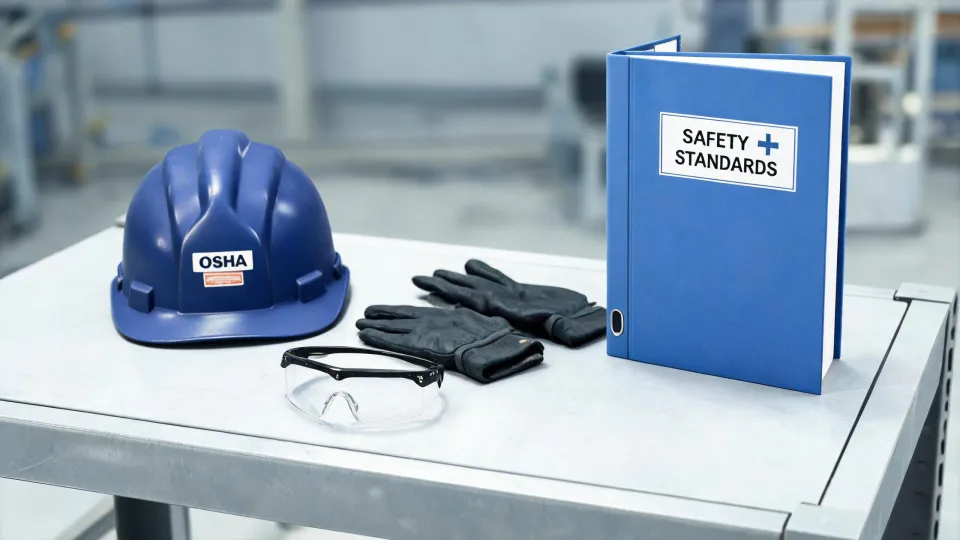
Here we're talking about gloves (like the Magid GPD700-10), safety glasses, hard hats, coveralls. The question is usually: what glove level do I need?
The glove hierarchy
ANSI/ISEA 105-2016 rates cut resistance on a scale from A1 to A9. Here's the rough breakdown:
- A1-A2: Light assembly, general handling, packaging. Think shipping and receiving.
- A3-A4: Light construction, drywall work, metal handling with low risk. Most common for general contractors.
- A5-A7: Glass handling, metal stamping, sharp edge work. This is where you need actual cut-resistant materials like HPPE or steel mesh.
- A8-A9: Extreme cut hazards—like blade work or heavy metal fabrication. Rarely needed outside specialized roles.
What most people don't realize is that a higher cut level doesn't automatically mean a better glove. An A9 glove is extremely thick and stiff. You lose dexterity. For a warehouse worker who needs to handle boxes, an A9 glove would be miserable. The right glove is the one that protects against the specific hazard you face while still letting you do your job.
What about that Magid GPD700-10?
The Magid GPD700-10 is a dipped glove (usually a foam latex or nitrile coating over a liner). It's a good all-rounder for general industry. I've handled samples (this was back in Q1 2024 during a quality audit). The palm coating gives decent grip, the back is breathable. It's not a high-cut glove (probably A2-A3 range based on the liner), but it's fine for general material handling. If you need serious cut resistance, you need a different product. Don't buy a GPD700-10 for a glass cutting line—you'll be disappointed.
Scenario C: You're Thinking About Pool Safety (Perimeter Barriers)
A "pool fence" is a completely different category. This isn't personal protective equipment (PPE); it's a passive barrier system. The question is usually: do I need a permanent fence, a removable mesh fence, or an alarm?
The options
- Permanent fence: Usually aluminum, wrought iron, or wood. Meets many local codes. Good if you want a permanent solution. Expensive to install.
- Removable mesh fence: Polyester mesh with fiberglass poles. Common for pools where you don't want a permanent barrier (rental properties, seasonal use). Usually meets code but requires anchoring into the deck.
- Pool alarm: Electronic—gate alarms, surface wave sensors, or wearable wristbands. Cheaper, but less reliable. Code in many areas requires a physical barrier anyway.
Here's the thing vendors won't tell you: most of the cost in a pool fence is the installation labor, not the fence itself. A standard mesh fence might be $500-$1,000 for the materials, but installation (drilling into concrete, setting anchors) can double that. A permanent aluminum fence with gates is $2,000-$5,000+. The real question is: how long do you need it to last? If it's for a property you'll sell in 2 years, the mesh fence is fine. If it's your forever home, spend on aluminum.
How to Decide Which Scenario You're In
It sounds obvious, but most people mix up these categories. They think "I need safety gear" and then buy a glove when they need a vest, or vice versa. Here's a quick checklist:
- Is the threat a person or a sharp object? → Person = vest (ballistic or stab). Sharp object = glove.
- Is the threat passive (falling into a pool) or active (someone shooting)? → Passive = barrier (fence, alarm). Active = vest.
- Is the threat a long-term career risk (daily industrial work) or a one-time event? → Daily risk = high-quality, comfortable PPE that you'll actually wear. One-time = you can prioritize protection level over comfort.
If you're still unsure—and this is where the quality inspector in me kicks in—ask yourself: "What's the worst that could happen in my specific environment?" If the answer is "a sharp edge cuts my hand," you don't need a vest. If it's "someone breaks in with a handgun," you probably don't need a Level IV plate. Match the gear to the hazard, not to the fear.
Looking back, I should have bought a Level IIIA vest instead of a Level III for my first patrol setup. At the time, I thought "more protection = better." It wasn't. The weight made me stop wearing it, which defeated the whole purpose. If I could redo that decision, I'd prioritize consistent wear over maximum protection. But given what I knew then—nothing about the ergonomic trade-offs—my choice was understandable.
Bottom line: Identify your specific hazard. Then buy the gear that addresses it. Not the gear that makes you feel invincible.

Jane Smith
I’m Jane Smith, a senior content writer with over 15 years of experience in the packaging and printing industry. I specialize in writing about the latest trends, technologies, and best practices in packaging design, sustainability, and printing techniques. My goal is to help businesses understand complex printing processes and design solutions that enhance both product packaging and brand visibility.
Leave a Reply