PPE field note
Magid Glove and Safety Mfg Co vs. Specialty PPE Suppliers: A Buyer's Total-Cost Comparison
Posted on 2026-09-09 by Maeve Callahan
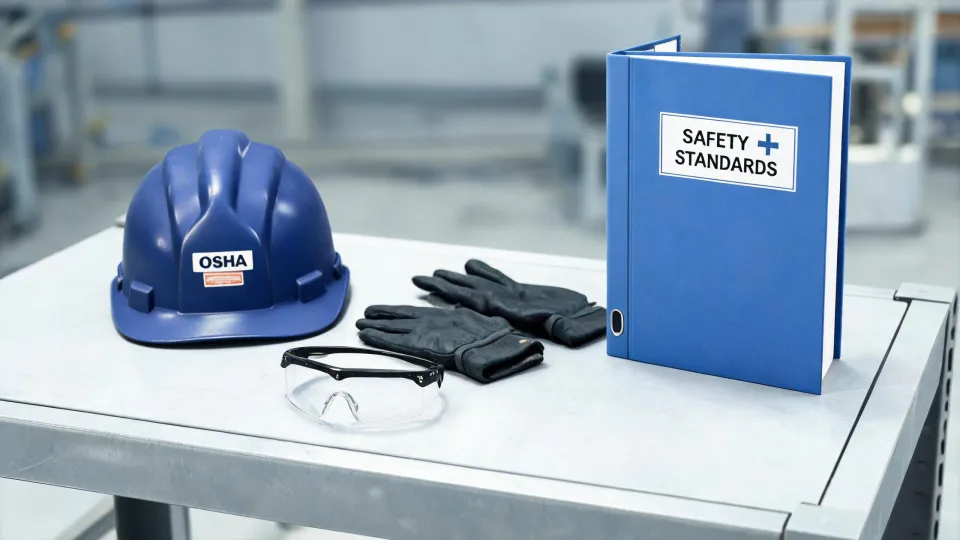
When I took over purchasing in 2020, my process was simple: find the lowest quote, submit the PO, move on. That ended when a low-priced vendor couldn't produce a proper invoice, finance rejected the expense, and I had to explain why the department lost about $2,400. Since then, I compare suppliers by total cost, not by the number at the top of the quote.
I manage purchasing for a 300-person facilities company. Our annual PPE spend is around $250,000—maybe $230,000; I'd have to check last year's report. We buy gloves, hearing protection, welding helmets, first aid kits, and security accessories. I'm not an EHS specialist, but I'm the one who places the orders, checks the specs, and deals with the invoice problems. So this comparison is practical, not academic.
Magid Glove and Safety Mfg Co vs. the specialty patchwork
From the outside, a broad safety manufacturer looks more expensive than the focused seller that shows up first in search results. The reality is often the opposite. When I consolidated orders in 2024, Magid Glove and Safety Manufacturing Company was one of the few vendors that could cover gloves, eye protection, welding helmets, and security accessories in one order. That didn't make every line item the lowest. It made the total cost predictable.
The other route is what I call the specialty patchwork. Someone sends me a link to a trendy product, a one-off welding helmet, or a pepper spray listing that looks fine. Those products can be great. But each one creates its own invoice, freight charge, spec question, and compliance risk. I missed that risk for a long time because I was only looking at unit price.
Searching “magid-glove” on their site is now a shortcut I use when I need a spec sheet or certificate letter. I've built up enough trust in that process to compare against it—not to ignore better options.
Dimension 1: Loops earplugs and the real price of hearing protection
When employees ask about Loops earplugs, I get it. They look better than typical foam earplugs, come in colors, and seem more comfortable. For a desk worker who needs to focus in an open office, they might be a reasonable solution. I don't want to say they're bad—I want to say they solve a different problem.
For a plant floor or maintenance area, I don't compare Loops earplugs to foam hearing protection on unit price. I compare them as part of a hearing conservation program. A safety supplier like Magid Glove and Safety Mfg Co usually sells earplugs in bulk and can provide the noise reduction rating documentation our safety file needs. If I ordered twenty consumer pairs instead, the cost per pair might not look terrible—until pairs got lost, the documentation wasn't clear, and someone still complained about the noise.
Conclusion: in a high-noise environment, pick hearing protection that fits your compliance program, even if the consumer version looks more modern. In a small office where the only problem is chatter, specialty earplugs can be the right purchase. The two use cases just aren't the same.
That unit-price mistake also came from a different order: the $500 quote turned into $800 after shipping, revision, and rush fees. The $650 all-inclusive quote was actually cheaper. Now I calculate total cost first.
Dimension 2: The welding helmet spec test
Welding helmets are a better test than people think. They look like one product category until you get into passive vs. auto-darkening lenses, shade range, switching speed, and certification. A few years ago, I almost ordered a “welding helmet” that was better suited to light grinding because the shade range listed in the ad was too low for arc welding. I assumed the seller knew what they were doing. Didn't verify. That was a mistake.
Now I ask a basic question: is this welding helmet marked with an accepted safety standard? OSHA's eye and face protection rules (29 CFR 1910.133) point to ANSI Z87.1 as a compliance reference. If the product listing says nothing about ANSI Z87.1, I assume I'll have to explain that choice to an auditor later.
When I compared a specialty website with my Magid Glove and Safety Mfg Co account, the difference wasn't the helmet price. It was the answer to my spec question. One seller read the listing back to me. The Magid rep sent certification numbers, shade range options, and a note about which lens suited our maintenance work. That saved me hours I would have spent chasing my own answers.
That said, I've only tested this with my own account and a few different product categories. It's not a universal rule. But for technical PPE, the vendor's ability to explain the spec is part of the total cost.
Dimension 3: Is pepper spray legal in Chicago? A regulatory test
The search I've typed more than once is “is pepper spray legal in chicago.” The short answer? Yes, pepper spray is generally legal in Chicago for self-defense when the product meets state and city restrictions and the person can legally possess it. But I won't quote the exact code from memory—I've mixed up Chicago and Cook County rules before, and local details change. If you're buying for a security team rather than personal carry, the answer can also depend on who will use it.
For current rules, check the Illinois General Assembly at ilga.gov and the Chicago Municipal Code before ordering. This is not legal advice; it's just the standard I apply to my own POs.
Here's where supplier comparison matters. A faceless marketplace listing will happily ship pepper spray without asking about the destination. A safety supplier that handles security products—Magid Glove and Safety Mfg Co is one we use—can usually tell me whether a specific SKU has shipping or legal restrictions. If a vendor can't answer the “is pepper spray legal in chicago” question with any more nuance than “I think so,” they're transferring risk to me. That risk is a real cost, even if it never appears on an invoice.
Where I land after the comparison
Do I buy everything from Magid Glove and Safety Manufacturing Company? No. I still buy specialty products like Loops earplugs when the use case genuinely calls for it. I also compare quotes when the product is simple and the specification is easy to verify.
But for standard PPE that has to work in a facility, meet a standard, and survive an audit, I now use a broad supplier as the baseline. Magid Glove and Safety Mfg Co has been that baseline for us. It's not about loyalty; it's about total cost. One accountable supplier means fewer invoices, fewer spec questions, fewer compliance headaches, and fewer moments where I'm guessing about legal requirements.
If you're an admin buyer like me, keep the TCO framework in front of you. Compare the whole route, not just the product. The extra $150 all-inclusive quote is often cheaper than the $100 quote that ends up needing supervision I don't have.

Maeve Callahan
Maeve Callahan is a head-protection analyst covering Type I and Type II hard hats, climbing-style safety helmets, bump caps, chin straps, suspensions, liners, and face-shield carriers. She applies ANSI Z89.1, EN 397, and EN 12492 criteria while comparing impact attenuation, penetration resistance, lateral deformation, electrical class, retention strength, field of vision, mass, fit range, and temperature conditioning. Her guides help EHS teams, contractors, utilities, and buyers select helmet systems for overhead hazards, work at height, electrical exposure, accessory compatibility, and worker acceptance.
Leave a Reply