PPE field note
Why "Good Enough" Safety Gear Costs More Than You Think: A Quality Manager's Perspective
Posted on 2026-09-16 by Maeve Callahan
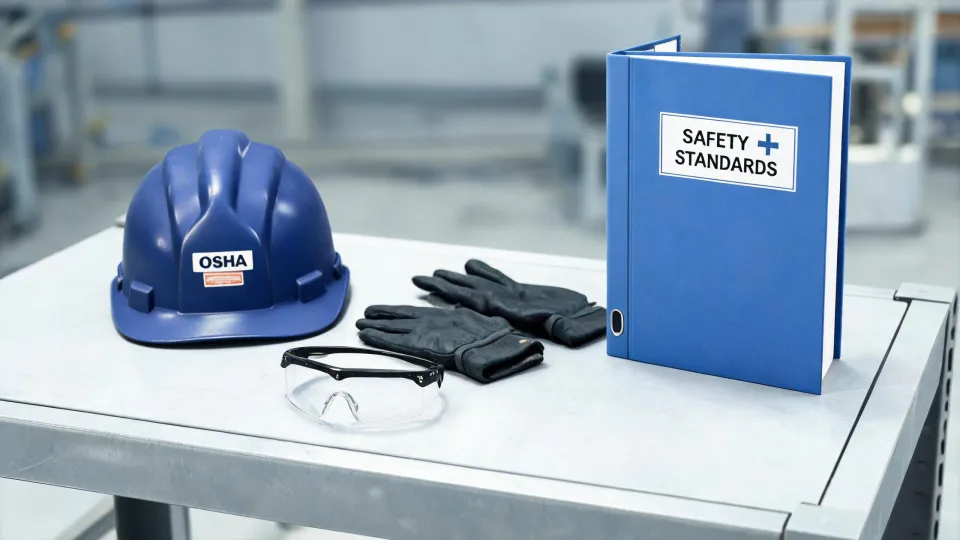
The Batch That Almost Got Someone Hurt
In Q3 2024, we received a shipment of 600 safety gloves from a new supplier. On paper, everything checked out. The spec sheet said "cut-resistant, size large, nitrile coating." Our PO said the same thing. When the pallets arrived, I did what I always do—pulled ten pairs at random and handed them to our line supervisor for a fit test.
Three of the ten tore at the thumb seam within the first hour of use.
Not because the gloves were defective. Because they were the wrong gloves for the job. The supplier sent us a general-handling model—something you'd wear to move boxes in a warehouse. Our workers handle stamped metal parts with burred edges. We needed ANSI A4 cut resistance. They shipped ANSI A1.
I said "cut-resistant." They heard "resistant to cuts, sure, at some level." Same words, different meaning. The gap between those two interpretations nearly cost someone a finger.
The Real Problem Isn't Quality—It's Specification Drift
When I first started managing vendor quality four years ago, I assumed most failures came from bad manufacturing. Cheap materials, sloppy QC, corners cut at the factory. And sure, that happens. But after reviewing 200+ unique items annually—gloves, safety glasses, hard hats, coveralls, respirators, first aid kits, even peripheral stuff like fence hardware and personal defense spray—I've learned that the bigger culprit is something less obvious.
It's specification drift. The slow, almost invisible gap that opens between what you think you ordered and what actually shows up.
Here's how it works in practice. You write a PO. The vendor reads it. Both sides nod. But somewhere in that exchange, assumptions fill the gaps that documentation didn't cover. You assumed "heavy-duty" meant 14-gauge steel. They assumed it meant 16-gauge. You assumed "weather-resistant" meant UV-stabilized. They assumed it meant "won't dissolve in rain."
The conventional wisdom is that you get what you pay for. My experience with hundreds of orders suggests something different: you get what you specify. Price is almost secondary.
Where This Shows Up Beyond the Factory Floor
I started noticing this pattern outside work, too. A friend of mine runs a small cattle operation in Missouri. He bought what he thought was a heavy-gauge cattle fence from an online supplier. Two seasons later, half the posts were leaning and the wire was sagging. "It was supposed to be galvanized," he told me. "Turns out 'galvanized' can mean a lot of things."
Same story with pool fence ideas. Homeowners search for "pool fence ideas," find something that looks good in photos, order it, and then discover it doesn't meet local code for height or self-latching gate requirements. The product isn't bad. The specification match is.
And then there's the pepper spray vs bear spray question I get from friends who hike. These are not interchangeable products. Pepper spray is formulated for human attackers—lower capsaicin concentration, shorter range. Bear spray is designed for, well, bears—higher concentration, longer spray distance, larger cloud. People buy one thinking it covers both scenarios. It doesn't. Wrong tool, wrong spec, potentially catastrophic outcome.
"The most dangerous phrase in procurement isn't 'we can't afford it.' It's 'that should be fine.'"
What Specification Drift Actually Costs
Let me put real numbers to this.
That glove batch I mentioned? We rejected it. The vendor redid the order at their cost—about $4,200 in product, plus expedited shipping because we were already behind. But the bigger cost was internal: two days of production disruption while we waited for replacements, plus overtime to catch up on the back end. All told, that "minor" spec mismatch cost us somewhere between $18,000 and $22,000 in combined direct and indirect expenses.
The glove itself cost about $7 per pair. The failure cost roughly $37 per pair when you do the math.
And that's the best-case scenario—nobody got hurt. I've seen worse. A colleague in Houston told me about a batch of safety glasses that passed initial inspection but failed impact testing in the field. Turns out the lenses met ANSI Z87.1 for basic impact but not for high-velocity impact. Three workers were exposed to flying debris before anyone caught it. No injuries, but the near-miss report alone triggered a full OSHA review.
The pattern holds across categories. A cheap cattle fence that fails in year two costs more than the premium fence you should have bought in year one. A pool fence that doesn't meet code means a re-inspection fee, a replacement order, and a delayed certificate of occupancy. A canister of pepper spray that runs out of propellant in six months because you bought a budget brand is worthless when you actually need it.
What Actually Works (And It's Not Complicated)
After four years of reviewing deliverables and implementing our verification protocol, here's what I've landed on—and it's embarrassingly simple.
Write specs that assume nothing. Don't say "cut-resistant." Say "ANSI A4 cut resistance per ASTM F2992-15." Don't say "heavy-duty fence." Say "12.5-gauge galvanized steel wire, Class 3 coating, minimum 50-year lifespan rating." Specificity is not pedantry. It's protection.
Verify before you commit. For recurring orders, request pre-production samples. For one-offs, ask for a certificate of analysis or third-party test results. If a vendor can't provide documentation, that's a red flag.
Build relationships with manufacturers, not just distributors. Companies like Magid Glove & Safety, which manufacture their own PPE, tend to have tighter control over specification consistency. When you're specifying something like the Magid GPD700-10—a specific glove model with defined performance characteristics—you know what you're getting because the manufacturer controls the production line, not a third-party sourcing agent.
Budget for certainty, not just product. In March 2024, we paid $400 extra for rush delivery on a replacement respirator order. The alternative was missing a compliance deadline that would have triggered a $15,000 penalty. That $400 bought certainty. The cheaper option bought anxiety.
The bottom line: the most expensive safety gear isn't the premium-priced option. It's the one that fails because nobody specified it correctly.
Prices and cost figures referenced are from internal records; actual costs vary by organization and order volume.

Maeve Callahan
Maeve Callahan is a head-protection analyst covering Type I and Type II hard hats, climbing-style safety helmets, bump caps, chin straps, suspensions, liners, and face-shield carriers. She applies ANSI Z89.1, EN 397, and EN 12492 criteria while comparing impact attenuation, penetration resistance, lateral deformation, electrical class, retention strength, field of vision, mass, fit range, and temperature conditioning. Her guides help EHS teams, contractors, utilities, and buyers select helmet systems for overhead hazards, work at height, electrical exposure, accessory compatibility, and worker acceptance.
Leave a Reply