PPE field note
What Is a PPE? A Quality Manager’s Honest Take on Buying Safety Equipment That Works
Posted on 2026-09-08 by Maeve Callahan
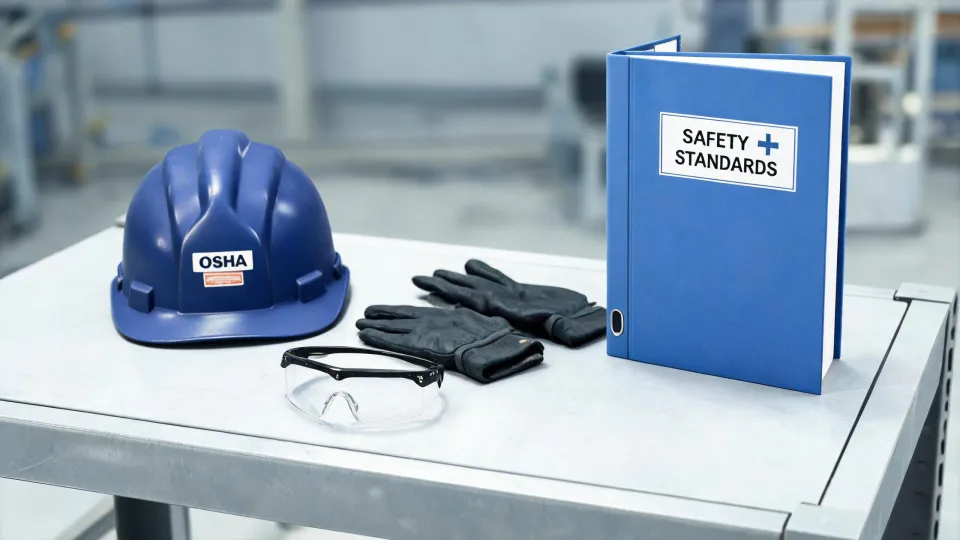
I’m going to say something that might surprise a few safety managers: the fact that you’re searching “what is a PPE” doesn’t mean you’re behind. It might mean you’re ahead. A lot of buyers never ask. They assume PPE is just gloves, glasses, and hard hats—and that anything labeled “safety” will do the job.
That assumption has caused more problems than I can count. And I don’t mean “problems” in some abstract paperwork sense. I mean workers relying on gear that was never right for the task because nobody checked what it was actually rated to do.
Let me establish something real: I’m a quality and brand compliance manager at Magid Glove and Safety Manufacturing Company LLC—you might know us as Magid Glove and Safety Mfg. Co., or just Magid. Part of my job is reviewing safety products before they go out under our label. That means a ton of incoming inspection, field testing, supplier audits, and the occasional uncomfortable conversation when something doesn’t meet spec.
Here’s the opinion I’ve landed on after years of that work: the cheapest and fastest way to improve workplace safety is to educate the person doing the buying. So let’s do some of that.
What Is a PPE? (And What It Isn’t)
Let’s start with the official part. According to OSHA (osha.gov), personal protective equipment—PPE—is equipment worn to minimize exposure to hazards that cause serious workplace injuries and illnesses. That includes hard hats, safety glasses, gloves, earplugs, respirators, coveralls, and safety shoes, among other things.
But here’s the catch. That definition is broad, and broad definitions create sloppy decisions. A construction electrician and a lab technician both “wear PPE,” but they aren’t doing the same job. The electrician needs arc-rated protection. The lab tech needs chemical splash protection. If you told both of them to “just grab some gloves,” you haven’t actually solved anything.
In our Q1 2024 quality audit, we caught a customer order headed out the door with the wrong glove class for the application. The gloves were cut-resistant, sure. But the ANSI cut level was lighter than what the job required. The buyer saw the words “cut-resistant” on the spec sheet and stopped reading. That’s not a product problem—that’s an education problem. It’s the kind of mistake that gives PPE a bad name.
Not Everything in a Safety Catalog Is PPE
Here’s something that surprises people outside the industry: if you browse a broad safety catalog, you’ll see products that are not, technically, personal protective equipment. A bulletproof vest is a great example. Body armor is tested against ballistic threats using standards overseen by the National Institute of Justice—it’s not the same compliance pathway as an ANSI-rated industrial safety product. It’s protective equipment, but it answers a different question. Meanwhile, a snow fence protects a site perimeter. Useful on a job site, yes. PPE? No.
I’m not being picky about language for the sake of sounding clever. The reason this matters is that compliance auditors and safety directors do use these definitions when evaluating your program. If you treat all safety products as interchangeable, you’ll end up with the right paperwork and the wrong protection.
“Certified” Doesn’t Automatically Mean “Correct”
The second mistake I see is trusting a lab sticker more than the actual working conditions. A product can pass a lab test and still fail in your facility, because your facility isn’t a lab. Your workers sweat. They wash their gloves. They drag equipment across concrete. They grab oily parts. All of that affects real-world performance.
I ran a field comparison back in 2022 with two similar-looking styles of work gloves. Both met the same glove standard. One had a coated palm, the other didn’t. The coated version lasted about three times longer in a wet-handling task before the material started breaking down. The unit cost difference? Around eighty-five cents. On a 20,000-unit annual order, that’s roughly $17,000 more upfront for the better option—which sounds like a lot until you factor in fewer replacements, lower injury risk, and less downtime.
The numbers told me to go with the cheaper glove. My gut said otherwise. The field trial proved my gut right. Now I trust field trials more than I trust spec sheets.
Ask Your Supplier These Questions Before You Buy
I’ll tell you what I tell every new buyer who asks me for advice: treat PPE purchasing like an audit, not a shopping trip.
- Ask for the actual lab report. Don’t settle for “it meets ANSI standards” in an email. Ask which lab, which test method, and the date of testing.
- Ask whether the company manufactures in-house or just rebrands. In-house manufacturing doesn’t automatically mean perfect quality, but it usually means more control over consistency. It also means there’s an actual plant you can ask about.
- Ask what happens when a batch fails. Are they inspecting incoming components? Is there a QA step before products ship? We reject nonconforming materials regularly. For example, a shipment of liner material came in at 12% off our spec last year—way outside our normal tolerance of 3%. We sent it back. That sort of story should make you more confident in a supplier, not less.
- Ask to test samples with your actual workers. This is the step everyone skips. You don’t need a formal study. Hand a few pairs of gloves to the crew and ask them to work a full shift. Listen to what they say.
The “Cheapest Compliant Option” Is Usually the Most Expensive One
Look, I’m not against saving money. But I’ve watched too many procurement teams celebrate a small purchase-order savings and then spend five times that amount fixing the consequences.
One buyer told me they saved about $300 by choosing a budget option for a workstation glove. A month later, the gloves were wearing through early, workers were swapping them out twice as often, and the safety manager had to expedite a replacement order. The rush shipping alone cost more than the original savings. In the end, that “smart” decision cost roughly $2,800 and a lot of frustration—and that’s before you put a dollar value on the frustration of a crew that stops trusting the company’s safety program.
That’s the part I think gets lost. PPE is one of those areas where the cheap choice doesn’t just fail financially. It fails culturally. Workers notice. When they see the company buying gear that falls apart, they start to believe safety is just a performance for regulators. That’s a lot harder to fix than a purchase order.
So, What Should You Actually Do?
If you take anything from this, take the definition seriously. Start with a hazard assessment, not a catalog. Know the difference between a snow fence and a safety glove. Understand that a bulletproof vest and an industrial safety product serve different threat models. And remember that “what is a PPE” is not a beginner question—it’s the foundation of every good safety decision.
An informed customer asks better questions, and better questions lead to better outcomes. That’s why I don’t mind spending ten minutes explaining glove standards or the hierarchy of controls. I’d rather do that than deal with the alternative later.
So ask the questions. Request the documentation. Test the product with the people who actually wear it. If a supplier can’t—or won’t—give you straight answers, that tells you something too.
Trust me on this one. I review this stuff for a living.

Maeve Callahan
Maeve Callahan is a head-protection analyst covering Type I and Type II hard hats, climbing-style safety helmets, bump caps, chin straps, suspensions, liners, and face-shield carriers. She applies ANSI Z89.1, EN 397, and EN 12492 criteria while comparing impact attenuation, penetration resistance, lateral deformation, electrical class, retention strength, field of vision, mass, fit range, and temperature conditioning. Her guides help EHS teams, contractors, utilities, and buyers select helmet systems for overhead hazards, work at height, electrical exposure, accessory compatibility, and worker acceptance.
Leave a Reply