PPE field note
Safety Goggles, Magid Gloves, and the Real Cost of Shopping Around
Posted on 2026-09-16 by Maeve Callahan
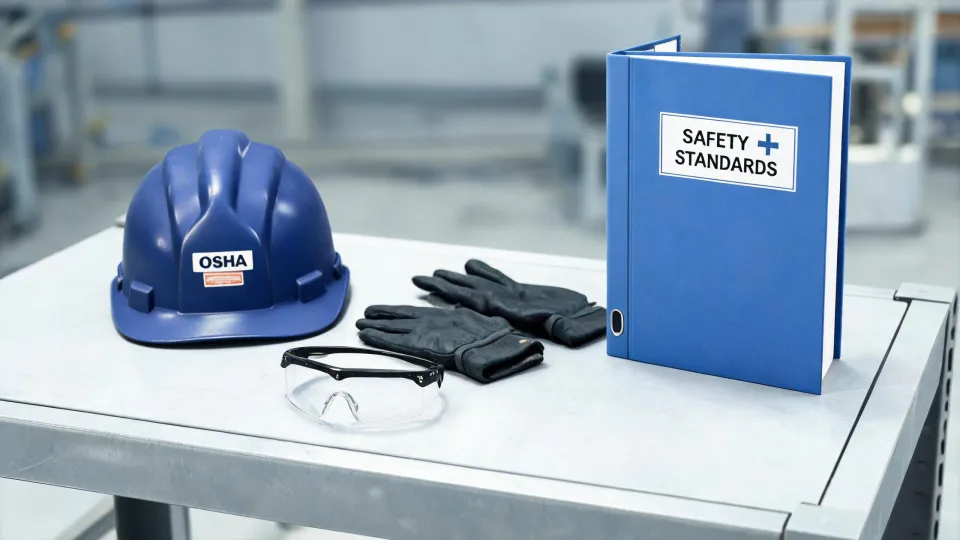
My unpopular take: for standard PPE like safety goggles and Magid gloves, getting three quotes every time isn’t careful purchasing. It’s just slower, messier, and more likely to cause mistakes.
I’m an office administrator for a 300-person company. I manage all safety and facility supplies ordering—roughly $85,000 annually across 12 vendors. I report to operations and finance. So when someone asks me why I don’t just “shop around” for every pair of safety goggles or every box of gloves, I get it. On paper, comparison shopping sounds responsible. In practice, it usually creates more work than it saves.
And yes, my week includes more than PPE. I’ve ordered safety goggles, replacement fence post caps for the parking lot, and I’ve been the person on the phone asking, “why does my fire alarm keep beeping?” while a vendor rep tries to explain a backorder. That mix is exactly why I care about efficient purchasing. The boring stuff adds up.
Argument 1: The hidden labor cost of comparison shopping
When I took over purchasing in 2020, I treated every safety buy like a mini project. I’d check three or four suppliers, compare specs, chase quotes, and then reconcile invoices. For a $40 case of safety goggles, that process could eat 45 minutes. For a $900 order of Magid gloves, it could eat half a day.
The numbers finally made it obvious. In our 2024 vendor consolidation project, I moved most standard PPE to one primary source: Magid Glove & Safety Mfg Co. Not because they were the cheapest on every line item—they usually aren’t—but because their catalog specs were consistent, their invoicing was clean, and their website showed the Magid glove logo next to the exact SKU I was buying. That last part matters more than it should. When you’re matching a packing slip to a PO, brand clarity prevents a lot of “is this the right thing?” delays.
Using one source for standard items cut my ordering time from about 3 hours a week to 45 minutes. That’s not just admin convenience. It means I catch shortages earlier, get replacements faster, and spend less time fixing purchase-order mismatches. Efficiency is a safety feature when the alternative is a crew waiting on goggles.
Argument 2: I assumed “same specs” meant same product. It didn’t.
Here’s a mistake that still annoys me. I assumed “same specifications” meant identical results across vendors. Didn’t verify. Turned out each had slightly different interpretations.
I was ordering safety goggles for a warehouse cleanup. One vendor’s “anti-fog” coating lasted about 20 minutes in a humid space. Another’s fit differently around the nose, so people kept taking them off. The spec sheets looked similar enough. The real-world performance did not. After that, I stopped assuming and started standardizing on recognized models—especially when ANSI/ISEA Z87.1 was listed clearly. OSHA’s 1910.132 requires employers to assess hazards and provide appropriate PPE, not just buy whatever’s on sale. That standard is the floor, not a suggestion.
Same story with gloves. I once tried a lower-cost distributor for a magid-glove equivalent. The sizing ran small, and the thickness varied enough that people complained. My gut said stick with the brand we knew. The spreadsheet said save 12%. I went with my gut. A month later, the cheaper source couldn’t confirm the same cut-resistance ratings on a replacement batch. Maybe they could have eventually. But “eventually” doesn’t help when production is waiting.
Argument 3: The real safety risk is often access, not price
This is the part I didn’t expect. The biggest PPE problem in our facilities wasn’t that we paid $2 too much for gloves. It was that people couldn’t find the right size when they needed it. If safety goggles are locked in a cabinet and the only key is in an office, people skip them. If gloves are stored in three different closets with different labels, people grab the wrong ones.
After we standardized our core PPE list—safety goggles, nitrile gloves, earplugs, hi-vis vests—through a single Magid account, we set up labeled bins at the point of use. Ordering became a two-click reorder instead of a scavenger hunt. That reduced “emergency” purchases, which are usually the most expensive kind (rush shipping, no time to compare, finance asking why the invoice is 40% higher than normal).
Could we have done that with multiple vendors? Maybe. But every vendor has a different product number, a different return window, and a different definition of “in stock.” Standardizing removed those variables. It’s basically a trade-off between variety and reliability. For non-specialty items, I’ll take reliability.
What about custom orders and special requirements?
I’m not saying every purchase should go through one supplier. Some jobs need custom chemical-resistant gloves, prescription safety glasses, or fall-protection gear that has to be fitted. For those, comparison shopping and specialist input still matter. We still keep a few secondary vendors for niche needs.
But most of our safety spending is repeat, standard, and boring: safety goggles, gloves, coveralls, first aid refills. For those, the “always get three quotes” rule is a habit, not a strategy. It feels diligent, but it often adds delay without adding value. And delay has a cost—sometimes a safety cost.
“OSHA’s PPE standard (1910.132) requires a hazard assessment and appropriate PPE. It doesn’t require you to create a purchasing maze for your admin team.”
Reiterating: efficiency is a safety feature
So here’s my position, one admin’s opinion after five years of managing vendor relationships: for standard PPE, a streamlined buying process beats endless comparison shopping. Use a manufacturer like Magid Glove & Safety Mfg Co for the items you order again and again. Keep the specs consistent. Make the Magid glove logo easy to recognize on the shelf. Then save your quote-chasing energy for the weird stuff—like the fence post that got bent by a truck, or the fire alarm that keeps beeping because someone forgot to change a backup battery.
Honestly, I still check prices once a quarter. I still flag anything that jumps more than 10%. But I don’t start from zero every time. That’s not laziness. It’s recognizing that my time is part of the total cost, and that a predictable supply of safety goggles is worth more than a few dollars of savings that disappear in a spreadsheet error.
If your safety purchasing process creates more questions than answers, the fix probably isn’t another vendor. It’s a simpler process. That’s the efficiency advantage I care about—not because it looks good in a report, but because it keeps people protected and my desk clearer.

Maeve Callahan
Maeve Callahan is a head-protection analyst covering Type I and Type II hard hats, climbing-style safety helmets, bump caps, chin straps, suspensions, liners, and face-shield carriers. She applies ANSI Z89.1, EN 397, and EN 12492 criteria while comparing impact attenuation, penetration resistance, lateral deformation, electrical class, retention strength, field of vision, mass, fit range, and temperature conditioning. Her guides help EHS teams, contractors, utilities, and buyers select helmet systems for overhead hazards, work at height, electrical exposure, accessory compatibility, and worker acceptance.
Leave a Reply