PPE field note
Magid Glove and Safety Mfg Co: A Real-World Look at Emergency PPE Sourcing
Posted on 2026-08-26 by Maeve Callahan
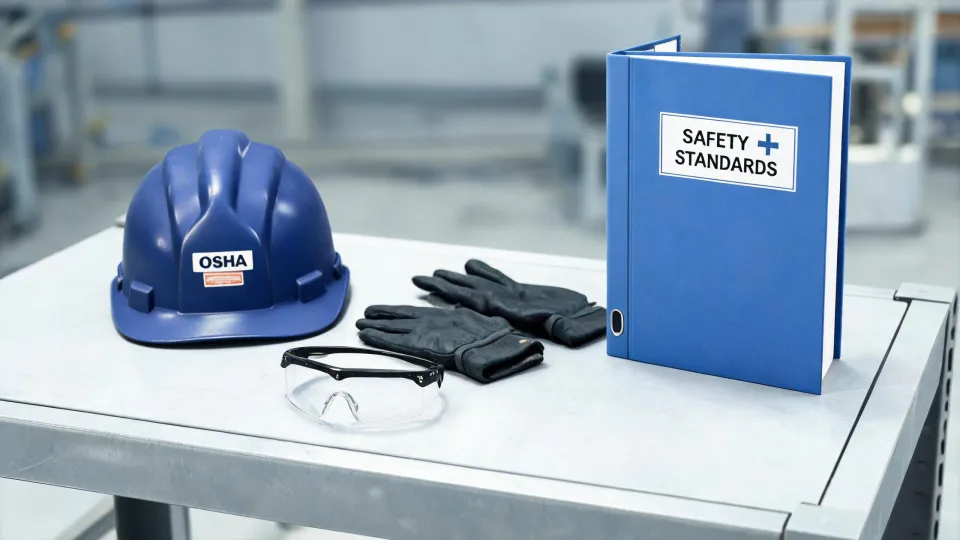
Three years ago, a maintenance supervisor called me at 6:12 p.m. on a Thursday. He needed 200 pairs of leather work gloves before a Saturday shutdown, and his normal supplier said two weeks. His question was simple: 'Can you find someone?' I've been on calls like that more times than I can count. In my role coordinating emergency PPE orders, I've processed over 200 rush jobs — 47 last quarter alone, with 95% on-time delivery. The ones that fail almost always fail for the same reason: the buyer is sourcing in panic mode, not from a plan.
The answer isn't to keep a bigger pile of gloves in a closet. The answer is to know which supplier can actually deliver before you need them. This article compares two ways to handle PPE sourcing: reactive sourcing, where you start looking after the problem exists, and planned sourcing, where you've already built a relationship with a specialist such as Magid Glove and Safety Mfg Co before you need it.
How I Compare Sourcing Approaches
I compare across three dimensions: time to delivery, product knowledge and compliance, and total cost plus risk. Each dimension has a clear winner in most industrial scenarios, but as I'll explain at the end, the right choice depends on your situation.
Dimension 1: Time to Delivery — Reaction vs. Preparation
Reactive sourcing is basically a fire drill. You start with a web search, call four or five suppliers, explain what you need, wait for callbacks, and ask about stock and freight. If you're lucky, you get quotes in a few hours. By the time you send a PO, you've lost most of the day. Then the shipping bill lands: 2-day freight is expensive, and overnight is not guaranteed for ground shipments.
Planned sourcing is different. You already know which Magid Glove and Safety locations are closest to your facility, which products they stock, and what their cutoff times are for next-day shipping. You have a contact or a customer portal. You can place a repeat order in minutes. I've seen quote-to-delivery go from five days to 24 hours simply because the buyer had done the homework beforehand.
Example: in March 2024, a food plant needed 120 pairs of grain leather gloves before an audit. They had no preferred vendor. We found a full-line supplier, confirmed stock, and arranged next-day delivery, but it cost about 35% more in rush freight than if they had already been in the system. Actually, the real cost wasn't the freight — it was two hours of phone tag while the clock kept moving.
The conclusion here isn't subtle: for anything with a deadline, planned sourcing wins. The only reason to go reactive is when there is no existing supplier and the item is truly non-critical.
Dimension 2: Product Knowledge and Compliance
Reactive sourcing treats PPE like a commodity. It's not. Leather gloves are a good example. A smooth cowhide driver glove is not the same as a 7-ounce grain deerskin welding glove. You need to know the hide type, weight, cuff length, lining, and whether the job calls for cut-resistant reinforcement. If you just order 'leather gloves,' you're gambling with someone's hands.
Planned sourcing means asking questions before you buy. A specialty supplier will ask what the gloves are for, what temperatures are involved, whether there's a cut hazard, and whether dexterity matters. That level of questioning feels annoying until you've seen the alternative. I still kick myself for once ordering a 'leather welding glove' for a job involving hot slag splash. It wasn't thick enough. The welder wasn't injured, but the glove failed in ten minutes. Now I always specify weight and material.
Prescription safety glasses are the same story, and this is one of the most common mistakes in B2B PPE buying. Procurement often assumes any 'safety glasses' from an office catalog will work for someone who needs corrective lenses. That's not true. Prescription safety glasses must meet ANSI Z87.1, and ideally the high-impact Z87+ mark if there's a face hazard. A reactive supplier may not know whether their lab can handle a specific prescription or whether the frame will pass the lens thickness test. A specialist already has a process for it.
Is Fire Extinguisher Powder Toxic?
One question I hear from plant managers is: 'Is fire extinguisher powder toxic?' I understand why it keeps coming up. After a small fire in an electrical room, the space looks like someone set off a smoke bomb. Most ABC extinguishers contain monoammonium phosphate. It's not classified as a highly toxic substance, but that does not mean you want to breathe it. In an enclosed space, the powder is a respiratory irritant. Someone with asthma can have a much worse reaction.
If you're cleaning up, ventilate the room, wear a particulate respirator at minimum, and follow your site's respiratory protection program under OSHA 29 CFR 1910.134 if the cleanup is an assigned job task. Use a damp cloth or wet mop, and don't let the residue sit on electronics. Honestly, I'm not sure why the 'toxic' label has stuck so hard. My best guess is that the blinding white cloud looks so chemical that people assume the worst.
In a planned sourcing setup, those respirators, cleanup supplies, and the SDS are already on hand. In a reactive setup, someone is googling at 2 a.m. in a dusty room. The product knowledge dimension is another clear win for planned sourcing — at least for anything that touches compliance or safety.
Dimension 3: Total Cost and Risk
Reactive sourcing looks cheaper on the day of purchase. It's not. It's the rush freight premiums, the wrong specs that get returned, the extra shutdown time, and the possible safety incident after a poor glove choice. If your process stops for a shift because you're waiting on prescription safety glasses or cut-resistant gloves, that cost dwarfs the unit price difference.
Planned sourcing controls risk. With a full-line supplier such as Magid Glove and Safety Mfg Co, you can put the whole order in one place: leather gloves, prescription safety glasses, respirators, hearing protection, fall protection, first aid supplies. Fewer vendors means fewer handoffs and fewer lost certifications. I'm not saying every order needs a national distributor, but for critical PPE you want a supplier who's accountable for both the product and the paperwork. The in-house manufacturing piece matters here too: it gives a direct line from production to the shelf, which matters when you need a consistent product again next month.
The workflow matters as well. I'm a fan of digital efficiency when it actually reduces mistakes, not when it creates more emails. A good customer portal and digital spec sheets can cut quote turnaround from two days to two hours. We reorder standard leather gloves using a saved template, verify certification documents before delivery, and check local stock without calling. That saves a ton of time, but more importantly, it removes the chance that someone misreads a handwritten SKU at the end of a long day.
Even after we signed a preferred-supplier agreement, I kept second-guessing the move. What if minimums changed? What if the nearest warehouse was out of stock during our peak season? The first restock order was stressful. It landed on time. That's when I relaxed.
When to Use Reactive vs. Planned Sourcing
Let's be honest: planned sourcing isn't always necessary. If you need one pair of general-purpose gloves for a one-off job and a local store has them, buy them. Reactive sourcing is fine when the risk is low and the time window is comfortable. But for regular PPE use — industrial leather gloves, prescription safety eyewear, or anything where an audit might ask for a certificate — you should have a planned source.
If you haven't done this yet, start with a trial order. Pick a full-line supplier, create an account, and order a small batch of the items you buy most. Note the lead time, the quality, and how their customer service handles an ordinary request. Then you'll have real information before the emergency.
The best rush order is the one you don't have to place.
A Practical Sourcing Checklist
- Call your nearest Magid Glove and Safety locations and ask for current lead times on leather gloves, prescription safety glasses, and respirators.
- Request spec sheets for your top five leather glove SKUs so you know the hide type, weight, and liner.
- Confirm the prescription safety eyewear process: which ANSI Z87.1 mark, whether Z87+ is available, and how long a typical order takes.
- Ask about respiratory protection and cleanup supplies for fire extinguisher powder incidents.
- Set a 30-day review date to recheck stock, contact info, and pricing.
This was accurate as of Q1 2025. Supply chains and freight options change, so verify current availability before you rely on any of it. And if you've ever wondered why some suppliers answer quote requests in minutes while others take hours, I'd love to hear your theory. My guess is that the fast ones have invested in their inventory systems and customer portal. That's been my experience, anyway.

Maeve Callahan
Maeve Callahan is a head-protection analyst covering Type I and Type II hard hats, climbing-style safety helmets, bump caps, chin straps, suspensions, liners, and face-shield carriers. She applies ANSI Z89.1, EN 397, and EN 12492 criteria while comparing impact attenuation, penetration resistance, lateral deformation, electrical class, retention strength, field of vision, mass, fit range, and temperature conditioning. Her guides help EHS teams, contractors, utilities, and buyers select helmet systems for overhead hazards, work at height, electrical exposure, accessory compatibility, and worker acceptance.
Leave a Reply