PPE field note
A Cedar Fence, a Box of Fuzzy Handcuffs, and the Case for Transparent Pricing
Posted on 2026-08-31 by Maeve Callahan
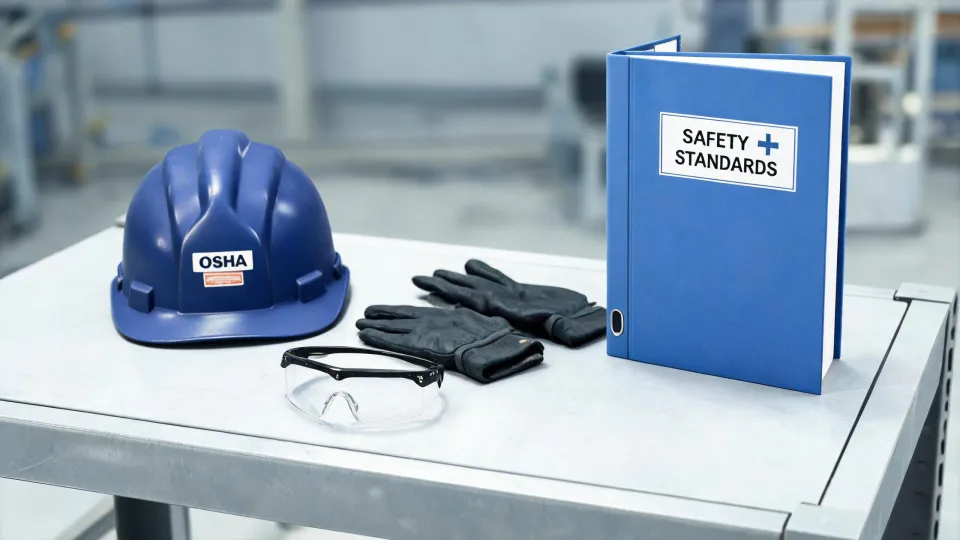
Last October, I spent a weekend building a cedar fence for a neighbor. It sounded simple: dig holes, set posts, attach rails. By Monday morning, I had blisters on both palms and a splinter under my thumbnail that took a week to dig out. The worst part? I work for a glove company.
I'm a quality/compliance manager at Magid Glove & Safety. In a typical year, I review roughly 50,000 units before they ship—gloves, safety glasses, hard hats, coveralls, even the occasional pair of handcuffs. You would think I'd know better than to grab a pair of $8 cotton gloves from a hardware store.
I didn't. That mistake turned into the best reminder I've ever had about why product quality matters more than the number on an invoice.
The Cedar Fence That Taught Me the Lesson
I went back and forth for two days about what gloves to wear for the fence project. A cheap pair of knit gloves felt like the obvious choice. A proper pair of leather work gloves seemed like overkill. So I went cheap.
The cotton gloves didn't fall apart immediately. They just didn't do what I needed them to do. The fabric soaked through, the seams bunched up, and splinters poked through on almost every rough-cut plank. I spent more time picking wood out of my hands than actually building the fence.
On the third day, I grabbed a pair of the same leather gloves we stock in our own warehouse. The fence went together in six hours. My hands didn't hurt, and I stopped flinching every time I lifted a board. Honestly, the difference wasn't just comfort. It was speed.
Let me be clear about context: this worked for me because I was handling rough cedar for hours. If you're doing light assembly, a coated nylon glove might be the right choice. The whole point is that the right glove depends on the job and the hazard. Your mileage may vary.
The Fuzzy Handcuffs That Flunked My Quality Check
A few days later, I walked into work and saw a note on my desk: 'fuzzy handcuffs.' It was a new order for a customer who, for some reason, needed a large batch of padded novelty restraints. They sound like a joke, but they're a product we sell, and they have a specification. The hinge was supposed to hold 85 pounds of pull without separating.
The first delivery didn't come close. At 60 pounds, a rivet popped on one side. When I called the component vendor, they said it was 'within industry standards.' There isn't a formal industry standard for fuzzy handcuffs. There's only the agreed-upon spec, and that shipment missed it.
This is where the pricing lesson comes in. The customer had chosen our quote, then another supplier sent a lower quote, and the order went there first. Those cheaper units failed after a few uses. The customer paid a restocking fee to return them, paid a second freight charge, and then came back to us. We tested every batch, rejected the first, and delivered a working product after one rework cycle.
And if you're here because you typed 'why is Mack Hollins in handcuffs' into a search engine, this is the part where I admit I can't answer that. I don't know the Mack Hollins story, and I'm not going to guess. But since you're here: the same quality logic applies to real restraints. A pair of fuzzy handcuffs can look perfect on the outside and still fail when it matters, unless someone actually checked the steel and the rivets.
Why Transparent Pricing Beats a Low Quote
That experience reinforced something I tell every new customer. I've learned to ask 'what's not included' before I ask 'what's the price.' A quote that lists testing, freight, and inspection might look higher. The quote that leaves those things out often costs more in total.
Per FTC advertising guidelines (ftc.gov/business-guidance/advertising-marketing), product claims need evidence. If a glove is labeled cut-resistant or a handcuff is rated for a certain load, there should be a test report behind it. We publish test methods and results on the Magid Glove & Safety official website—the one that shows up when someone searches 'magid-glove'—so customers can see exactly what a product passed.
Because Magid Glove and Safety manufacturing is in-house, I can pull production records for any batch. I can tell you which line it ran on, which operator handled it, and what the quality check showed. That kind of traceability is hard to fake, and it's the reason we can offer a detailed quote without adding surprise fees later.
Bottom line: the vendor who lists all fees upfront—even if the total looks higher—usually costs less in the end. That's true for a cedar fence, a box of gloves, or a batch of fuzzy handcuffs.
What I Would Do Differently
I would have worn the leather gloves on day one. Remembering that weekend still makes me laugh because I had a warehouse full of the right gear and I didn't use it.
The bigger takeaway is the same. Stop treating 'lowest upfront price' and 'best value' as the same thing. Ask for the spec. Ask for the test report. Ask what happens if the shipment fails. A supplier who answers those questions directly is worth the extra dollar per pair.
And if you ever wonder why a quality manager is so stubborn about a batch of fuzzy handcuffs? Because I've seen what happens when nobody checks. That's why every order, from leather gloves to novelty restraints, gets the same review before it reaches the customer.

Maeve Callahan
Maeve Callahan is a head-protection analyst covering Type I and Type II hard hats, climbing-style safety helmets, bump caps, chin straps, suspensions, liners, and face-shield carriers. She applies ANSI Z89.1, EN 397, and EN 12492 criteria while comparing impact attenuation, penetration resistance, lateral deformation, electrical class, retention strength, field of vision, mass, fit range, and temperature conditioning. Her guides help EHS teams, contractors, utilities, and buyers select helmet systems for overhead hazards, work at height, electrical exposure, accessory compatibility, and worker acceptance.
Leave a Reply