PPE field note
Magid Glove and Safety Mfg Co: What’s PPE, Tillman Welding Gloves, and Pepper Spray for Dogs
Posted on 2026-09-04 by Maeve Callahan
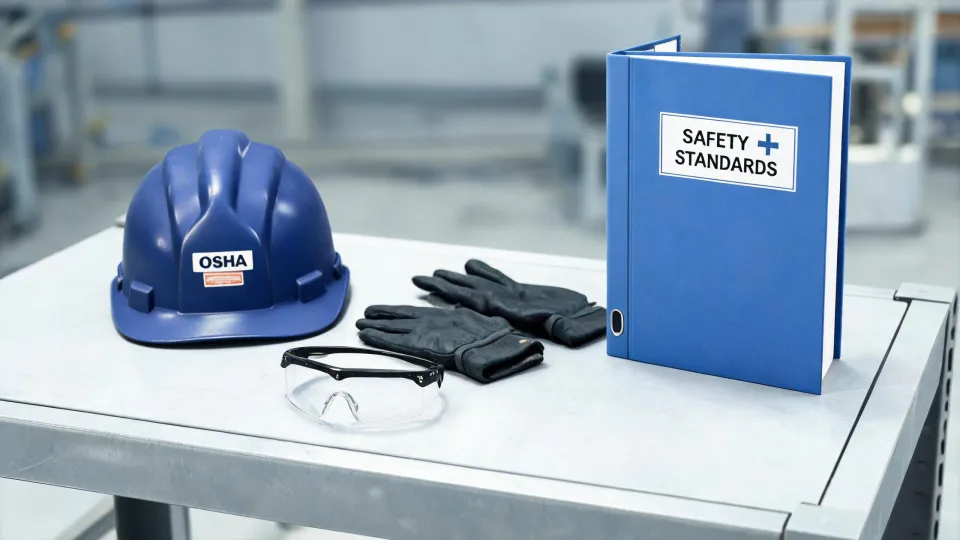
I manage PPE orders for a 300-person manufacturing plant. I’ve typed “whats ppe” into a search bar more times than I’d like to admit—usually because a new hire did not want to ask a second time in a safety meeting. After seven years, the honest lesson is simple: PPE is not a commodity. The right choice depends on who is exposed, what the hazard is, and how long the protection needs to work.
PPE, strictly speaking, means the gear that sits between a person and a hazard after you’ve tried to eliminate or reduce the hazard. It includes gloves, safety glasses, hard hats, boots, respirators, hearing protection, and even items like pepper spray when a lone worker faces a dog threat.
The reason I don’t give one “best product” answer is that I’ve made the mistake of trying to. I keep a folder called “my ordering mistakes.” This article is basically that folder, reorganized by scenario.
Let’s start with the three scenarios I keep running into:
- Scenario 1: You’re equipping a team of workers who face multiple routine hazards.
- Scenario 2: You’re a welder looking for a specific type of glove, like Tillman welding gloves.
- Scenario 3: You’re a lone worker wondering, “Can you use pepper spray on dogs?”
Scenario 1: You’re Equipping a Team
When you buy for a team, the product list starts with the hazard list. OSHA’s PPE standard, 29 CFR 1910.132, tells employers to assess the workplace for hazards and then choose protective equipment that fits each task. In plain terms: if you can’t name the hazard, you can’t name the glove.
The next step is where I see the most mistakes. Buyers ask “Which quote is cheaper?” when they should ask “What is the total cost of ownership?” Total cost of ownership—TCO—includes unit price, shipping, fit, lifespan, replacement frequency, storage, and the cost of an injury if the product fails.
I still kick myself for a 2018 order of 400 pairs of “economy” work gloves. The price per pair was significantly lower than the brand we normally stocked. Two shifts later, the gloves were splitting at the thumb seam. We had to issue replacements, pay freight again, and explain to a dozen supervisors why their workers were wearing taped-together gloves. The real cost was higher than the better glove would have been from day one.
Since that mistake, I compare every bid using three numbers: expected lifespan, replacement frequency, and the time a worker spends waiting for a correct size. The supplier that answers those questions honestly is usually the one I trust, even if its price is not the lowest.
This is also why Magid Glove & Safety Mfg Co ended up in our system. Magid Glove and Safety Manufacturing Company—the full name—publishes the kind of technical detail I need for a TCO comparison, and their range covers gloves, glasses, hard hats, coveralls, respirators, and other personal safety items. But the framework works with any supplier that gives real specs.
Scenario 2: You Need Tillman Welding Gloves
Now change the context. A welder asks you to order Tillman welding gloves. They are not asking for “a safe product.” They are asking for a product that works for their process, whether that is TIG, MIG, stick, cutting, or grinding.
The biggest mistake people make with welding gloves is treating the brand like a single answer. Tillman makes a family of products. A heavy MIG or stick process usually calls for a thicker split-leather style with a long gauntlet. TIG welding demands much more finger sensitivity, so a thinner, softer, tighter-fitting glove is often the better choice. A general-purpose glove might do neither job perfectly.
I learned this the expensive way. I ordered 48 pairs of what the sales rep called “good general welding gloves.” The TIG side of the shop rejected them immediately—too thick and clumsy. The MIG side accepted them, but only because they already had their own backup gloves. My order created a pile of unused inventory and a second shipment of specialty gloves. The quote was fine. The scenario was wrong.
So if you’re searching for Tillman welding gloves, narrow the search before you look for a price. Process first, cuff length and leather weight second, and then compare lifecycle cost across the two or three styles that actually match your work.
Scenario 3: “Can You Use Pepper Spray on Dogs?”
This one comes up with delivery drivers, utility workers, and night inspectors. It is barely a PPE question for most safety buyers, but in the field it is absolutely a personal-safety-equipment question: what do I use when a dog attacks and I’m not allowed or able to run away?
Honest answer: pepper spray can stop an attacking dog, but it is not a substitute for avoidance, barriers, or workplace safety rules. Use it as part of a plan, not instead of one.
There are three things to check before carrying dog spray. First, local law. Some jurisdictions restrict pepper spray or require a license; you can’t assume what is sold in the next county is legal in yours. Second, employer policy. Customer sites and company vehicle rules may prohibit defensive sprays, even if the state allows them. Third, the animal. A dog that is barking behind a fence is not an active threat. Spraying a dog that is not charging can turn a non-incident into an animal-cruelty complaint, a lawsuit, or both.
If you have checked the legal and policy layers, practice with the actual canister you plan to carry. A stream-style spray is usually easier to use outside than a fog because it is less affected by wind. Aim for the dog’s face in short bursts while you move toward a barrier or away from the area. Do not carry a canister in a pocket where it will take too long to reach.
The total cost thinking matters here too. One bad spray decision can cost more than a thousand cans of pepper spray. The buyer asking “can you use this?” is asking the right question. The person who forgets “should I use this?” is the one who ends up in a hearing.
How to Tell Which Scenario You’re In
When people ask me what PPE to buy, I ask them who is exposed. That single question sorts most conversations instantly.
If you are equipping a team, you are in Scenario 1. Build a hazard matrix first, choose approved options for each job role, and calculate total lifetime cost before you compare unit prices. The worker receiving the PPE should be part of the fitting process.
If you are choosing for your own hands or one welder’s station, you are in Scenario 2. Let the person who does the job decide between two or three acceptable styles. Their feedback is not opinion; it is data.
If you are dealing with a dog threat, you are in Scenario 3. The first purchase is not the spray. The first purchase is time spent on local law, company policy, and a plan that does not rely on a chemical product as your only defense.
The Matching Is the Safe Part
Proper PPE is not the product on the shelf. It is the match between that product, a specific hazard, and the human wearing it. A cheap glove that fails in two shifts is expensive. A good glove that does not fit the job is still a failure. A pepper spray canister used without policy review is just a new liability.
Magid Glove & Safety Mfg Co has become a useful starting point for me because they cover a broad range—from Tillman welding gloves to basic PPE to defensive safety products like pepper spray. But no catalog can replace the habit of asking “what is the scenario?” before asking “what is the price?” That habit is what keeps people safe and keeps budgets honest.

Maeve Callahan
Maeve Callahan is a head-protection analyst covering Type I and Type II hard hats, climbing-style safety helmets, bump caps, chin straps, suspensions, liners, and face-shield carriers. She applies ANSI Z89.1, EN 397, and EN 12492 criteria while comparing impact attenuation, penetration resistance, lateral deformation, electrical class, retention strength, field of vision, mass, fit range, and temperature conditioning. Her guides help EHS teams, contractors, utilities, and buyers select helmet systems for overhead hazards, work at height, electrical exposure, accessory compatibility, and worker acceptance.
Leave a Reply