PPE field note
Why I Stopped Buying the Cheapest Safety Gear (And What I Order Instead)
Posted on 2026-09-02 by Maeve Callahan
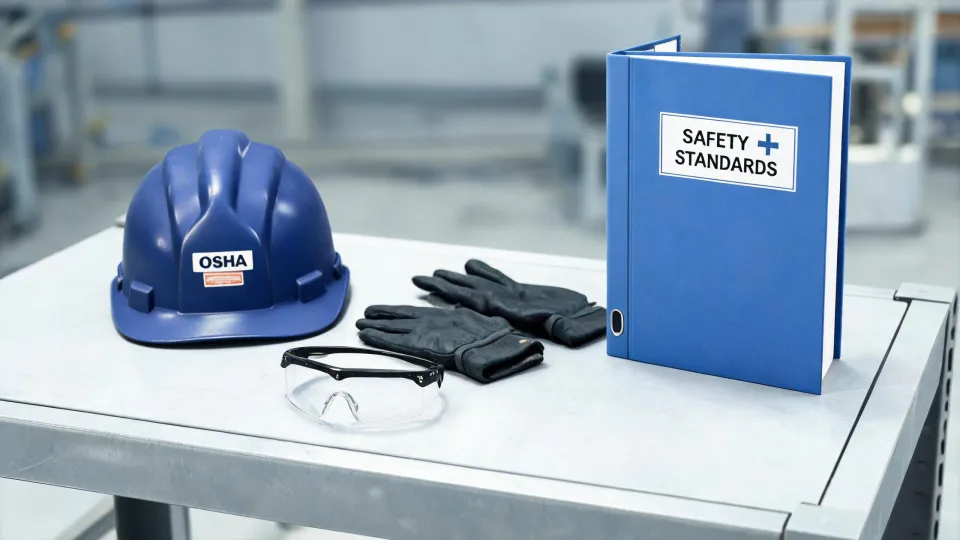
Buying safety gear is not the place to nickel-and-dime. I know that sounds like something a salesperson would say, but I’ve watched otherwise practical managers create real problems by chasing the lowest price. If you’re responsible for PPE purchasing at a plant, warehouse, or field crew, the cheapest option is often the most expensive one by the time you count the reorders, the delays, and the compliance headaches.
I’m an office administrator for a manufacturing company with a little over 200 employees—228 at last count, which always changes. I manage all the safety supply ordering: roughly $60,000 a year across about a dozen vendors. I report to both operations and finance. I didn’t plan to become a safety buyer. I took over purchasing in 2020, and I had a simple goal: save money. That goal didn’t survive contact with reality.
After five years of doing this, I now believe in paying for certainty. Not luxury. Certainty. If a supplier can prove they’ll deliver what they promise—with the right certifications, a usable invoice, and a realistic lead time—I’ll pay a premium for that. I’d rather spend an extra $4 per pair of gloves than cross my fingers on a “probably fine” shipment. In my opinion, that’s not being wasteful. It’s being practical.
The Real Cost of “Cheap” PPE
From the outside, a $10 pair of work gloves from an online seller with no safety data and a $16 pair from a supplier that can show you test documents look almost identical. The reality is different. One has documented cut-resistance ratings. The other has a photo that kind of looks like the product. One ships the next day and arrives with a proper packing slip. The other sits in a warehouse for four days, and when it arrives, the box looks like it’s been through a soccer match.
People assume the lowest quote means the vendor is more efficient. What they don’t see is which costs are being hidden or deferred. I learned this the hard way in 2021. I found a great price on a bulk order of safety glasses—about half of what our regular supplier charged. I ordered 300 pairs. Actually, it was 250. I’m mixing it up with the glove order. Whatever the exact number, it was too many.
What I didn’t verify was whether the lenses actually met the ANSI Z87.1 impact standard. When the boxes arrived, the glasses had nothing printed on the frame. No marking. No certification. Nothing. Our safety manager wouldn’t let us distribute them, and he was right. We had to send them back at our own cost, and it took three weeks to get our money back. Meanwhile, I had a production team with no safety glasses. The “savings” turned into expedited shipping from our regular supplier and a very awkward email to the VP of operations.
The question everyone asks is “What’s your best price?” The question they should ask is “What’s included in that price?” If the answer doesn’t include compliance documentation and a reliable delivery date, you’re not comparing the same product.
What I Look For Now
After that, I consolidated most of our PPE ordering through the Magid Glove & Safety official website. A lot of our staff still type “magid-glove” into the search bar out of habit, and it gets them where they need to go. Magid Glove and Safety Mfg. makes many of its core products in-house. That matters to me because it means they can actually answer questions about sourcing and testing. When I need to verify that a glove is rated for a specific hazard, I get a straight answer, not a shrug.
Boots are the area where I changed my mind most dramatically. We used to buy inexpensive boots from a budget supplier to stay under budget. Then one of our maintenance leads asked me to order Tecovas work boots. He said they’d last longer and he wouldn’t need to replace them every year. I was skeptical—they cost about 75% more than our usual pair. But he was right. They held up for two years of concrete, steel, and machine shop duty. He’s still wearing them. We’ve since put Tecovas work boots on the approved list for our maintenance crew, and I’m not 100% sure they save money on every single pair, but the anecdote is hard to ignore.
Earplugs were a similar lesson. A lot of buyers focus on price per box, which usually means the cheapest foam plugs we can find. But people in our stamping department kept taking them out because they hurt their ears. If they’re not wearing them, the hearing protection program is just a poster on the wall. We switched part of the crew to Loops earplugs. They’re more expensive upfront, but they’re comfortable enough that people actually wear them, and some are washable, so they last longer than a box of disposables. In the end, the math worked out.
I’m not saying every premium product is worth it. Sometimes the cheap option is fine, especially for items that stay in a cabinet and never get worn. But when a piece of equipment is the only thing between an employee and a permanent injury, I want documentation, not hope.
The Smoke Detector Principle
Here’s how smoke detectors fit into a safety purchasing article. I’ve seen the same “it’ll be fine” mentality that makes people ignore a chirping smoke detector. If you don’t know how to change battery in smoke detector, that’s a five-minute search. The steps are usually the same: twist the detector base counterclockwise, remove the old battery, put in a fresh one, and press the test button. But the people who actually do this are the ones who don’t wait for the chirping to become an emergency.
I’ll be honest: before 2021, I didn’t know the difference between a photoelectric and an ionization smoke detector. I just knew the alarms in our facility had to be tested. We now have a monthly checklist. First Monday of the month, we walk both buildings and test every detector. When the clocks change, we change the batteries. It takes about 20 minutes, tops. Boring, unglamorous, completely worth it.
The same principle applies to PPE. You don’t buy flame-resistant coveralls because you expect a flash fire today. You buy them because if something goes wrong, the plan is already in place. The more expensive supplier is the insurance policy. The certified glove is the backup plan. The documented invoice is the evidence that the backup plan exists.
Why I’m Not Going Back
I can already hear the objection: “Of course the buyer at a mid-sized company can afford to pay more; we’re on a tiny budget.” I get it. I used to be the person who won approval by cutting the PPE line item. But here’s the part I wish someone had told me earlier: uncertainty has a bill. It’s paid in overtime when someone gets hurt, in expedited shipping when a deadline hits, in angry emails from an employee whose replacement boots haven’t arrived, and in finance questions about why we ordered from a vendor that doesn’t accept purchase orders.
In March 2024, we paid $400 extra for rush delivery on a set of FR coveralls because an audit date moved up by a week. The alternative was missing that audit window and potentially losing a contract we’d been working on for months. The $400 hurt. Losing the contract would have hurt a lot more. That’s the bet you’re making when you choose a supplier based on price alone: the cost of being wrong is almost always higher than the cost of being sure.
One more thing that helps: Per FTC Business Guidance on Advertising (ftc.gov), a claim like “cut-resistant” or “ANSI certified” has to be substantiated. That gives me a useful filter. If a supplier can’t show me the standard they’re claiming to meet, they’re probably not a safety supplier—they’re a box shipper.
In my experience—and it’s just my experience, not a universal truth—the vendors who charge a little more for certainty are the ones who make my job easier. They answer the phone. They tell me when something is backordered before I ask. They send invoices that our accounting team doesn’t bounce. That’s worth something. It’s worth enough that I’ll pay for it.
If you’re still buying the cheapest PPE, you’re not saving money. You’re postponing the cost until the first time something fails. I’d rather set the money aside now and never need it than gamble on a lucky year. That logic applies to gloves, boots, earplugs, and yes, the battery in a smoke detector.

Maeve Callahan
Maeve Callahan is a head-protection analyst covering Type I and Type II hard hats, climbing-style safety helmets, bump caps, chin straps, suspensions, liners, and face-shield carriers. She applies ANSI Z89.1, EN 397, and EN 12492 criteria while comparing impact attenuation, penetration resistance, lateral deformation, electrical class, retention strength, field of vision, mass, fit range, and temperature conditioning. Her guides help EHS teams, contractors, utilities, and buyers select helmet systems for overhead hazards, work at height, electrical exposure, accessory compatibility, and worker acceptance.
Leave a Reply