PPE field note
How a $3,200 PPE Mistake Taught Me to Verify Before I Buy (Even Baby Fences, Fish Tank Filters, and Bear Spray)
Posted on 2026-08-19 by Jane Smith
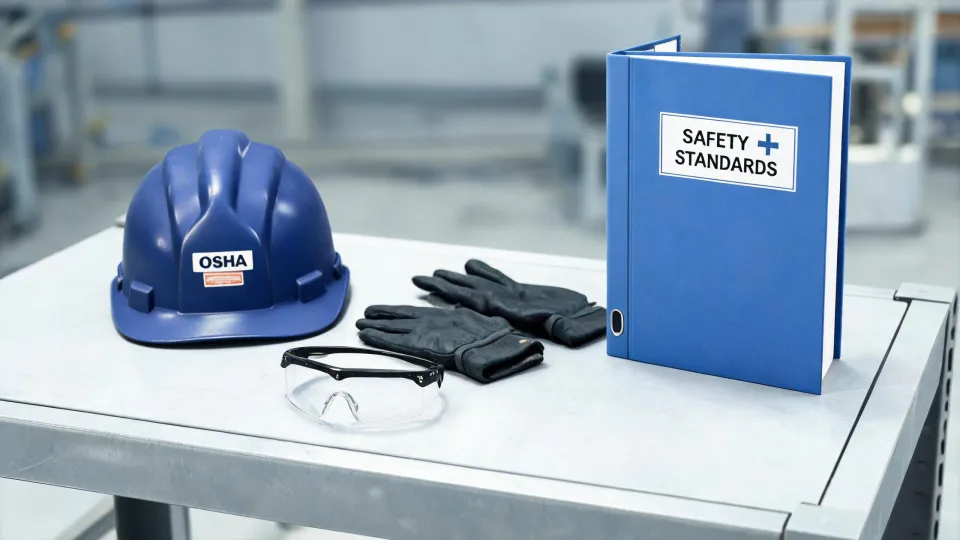
It started with a pallet of gloves.
In September 2022, I watched a forklift drop off 5,000 pairs of cut-resistant gloves, shrink-wrapped and neatly stacked. I opened a box, pulled out a glove, and turned it over. The color was right. The cuff was right. The packaging had the same ANSI cut level logo I'd approved on the purchase order.
And it was completely wrong for the job.
Those gloves were designed for light assembly work—handling sharp edges, maybe sheet metal. But our crew was cutting fiberglass insulation on a commercial roofing project. The "cut-resistant" rating meant nothing for that kind of abrasive, dusty work. The gloves disintegrated in four days. We had to stop the job, reorder the right product, eat the cost, and explain to the client why production stalled.
That $3,200 order? The invoice was just the start. By the time we paid for return freight, rush shipping, overtime, and the damage to our credibility, the real number was closer to $6,000. And it was entirely preventable.
I've been a safety manager handling PPE orders for eight years. In that time, I've personally made and documented six significant mistakes, totaling roughly $12,000 in wasted budget. This one was the worst. But it was also the turning point that made me build a system that's now caught 47 potential errors in 18 months.
The Problem I Thought I Was Solving
In the beginning, I thought my job was simple: find the cheapest glove that met the spec on the sheet. I'd spend hours comparing quotes, negotiating bulk discounts, and celebrating the money I "saved" the company.
The problem is, I was measuring the wrong thing.
A glove that costs $2 less per pair but fails in two weeks is more expensive than a $3 per pair glove that lasts two months. But you don't see that when you're holding a purchase order. You see the unit price. You see the budget line. You don't see the lost productivity, the returns, the rework, or the near-miss incident that could have gone a completely different way.
People think a cheap price means savings. Actually, a cheap price just means you pay less today. The real cost shows up later—in the form of a crew member's injured hand, or a complaint from a client whose deadline slipped.
Take the glove disaster. We'd bought a popular brand from a major supplier. I won't name them, because it's not their fault. The glove was fine for what it was designed for. Our mistake was that we didn't verify whether it was designed for our application. We just saw "cut-resistant" and imagined that meant it could handle everything from cardboard to fiberglass.
That's the deep problem, and it's more common than you'd think. According to FTC guidelines (ftc.gov), any safety claim must be truthful and substantiated. Terms like "cut-resistant" sound specific, but they're shorthand for a performance class–like ANSI A4 or A5—and that class depends on a specific test method. If you don't check the standard, you're not choosing a glove. You're guessing.
The Hidden Difference: Pepper Spray vs Bear Spray
This lesson didn't just apply to gloves. A year earlier, I almost ordered pepper spray for our plant security officers without checking the state regulations. My plan was simple: "pepper spray, bulk pack, orange canister." But while I was reading the product details, I realized the item I was about to buy was actually a product designed for wildlife encounters, not personal defense.
Pepper spray vs bear spray: they're not the same. Pepper spray, meant for two-legged threats, contains oleoresin capsicum (OC) at a concentration designed to cause temporary disablement. It has a targeted stream or fog pattern and a specific range. Bear spray, on the other hand, is formulated to deter large animals. It has a wider, shorter burst, a higher output volume, and often a lower OC concentration. In some jurisdictions, bear spray isn't even legal for self-defense against people. If I'd bought it and handed it to a security guard who tried to use it during a confrontation, it might have failed when it mattered most.
The fact that I caught this before placing the order was luck. I don't have hard data on how many procurement employees inadvertently buy the wrong safety product because of confusing labels, but I've seen enough close calls to know it's not rare.
The Ripple Effect of a Bad Order
Getting the wrong PPE doesn't just waste money. It breaks trust.
After the glove failure, our maintenance crew didn't trust my safety equipment orders for months. They started buying their own "workaround" gloves on company cards—which meant our inventory records were wrong, our bulk pricing was gone, and worst of all, some guys were using non-rated gloves because they'd given up on the system.
The same dynamic applies to consumer purchases, just on a smaller scale. I once bought a baby fence for my son without measuring the doorway where I wanted to install it. The panels didn't fit, the gap was too wide, and the thing sat in the garage for a month before I finally sent it back. The return shipping cost $14, plus an hour of my Sunday, plus the fact that my toddler had a four-week window where there was no safety barrier in place.
I've even seen this happen with a fish tank filter cartridge. My neighbor found a "universal" filter for his aquarium, but it didn't match the tank's internal chamber. It leaked, the pump burned out, and the water damage to the floor cost more than the filter itself. All because he skipped the five-minute check of the manual and the model number.
The pattern is everywhere: we skip the five-minute verification and end up paying with five days of correction. The scale changes—hundreds of dollars or thousands—but the principle never does.
What Finally Made It Click
In 2021, after my third costly mistake, I sat down and built a 12-point pre-order checklist. It's not a work of genius. It's basically a list of questions I should have been asking all along:
- Define the exact application. Not just gloves, but what material, what motion, what hazard.
- Identify the specific standard or performance class tied to that hazard.
- Ask the vendor for a test report from a third-party lab.
- Order a sample and let the crew try it in the field.
- Check legal restrictions and compatibility (yes, pepper spray vs bear spray matters).
Since we implemented the checklist, we've caught 47 potential errors in 18 months. Some were tiny—a missing fastening clip on a respirator order. Some were huge—a batch of chemical-resistant gloves that would have failed within a day of exposure to the solvent we use. I don't have an official audit of every catch, but the estimated savings are around $8,000. That's money that stayed in our budget, and more importantly, it's injuries and near-misses that never happened.
Why I Ended Up With Magid
I can only speak to our own experience, but this is also why I eventually shifted a big chunk of our PPE procurement to Magid Glove and Safety Manufacturing Company LLC. Their in-house manufacturing model made a difference. When I called about the Magid Glove & Safety GPD700-10, the representative didn't just read a spec sheet. She knew that the GPD700-10 is a cut-resistant glove with a specific ANSI level, and she asked about our application before recommending it. She sent the actual test report, not a link to a catalog.
I'm not saying Magid is the cheapest option, and I'm not suggesting their products are right for everything. The GPD700-10 is just one glove. But in a market full of resellers and imported brands, talking to a company that actually makes the product felt like a breath of fresh air. It didn't hurt that they carried a broader line of safety equipment—which meant fewer orders to track.
The Five-Minute Rule
Here's the simplest thing I can offer from all this: the five-minute rule. Before you hit "buy" on any safety product, spend five minutes checking the spec against your real conditions. It doesn't matter if it's a $3,200 PPE order, a $40 pepper spray vs bear spray decision, a $120 baby fence, or a $15 fish tank filter cartridge. The questions are the same:
Is this exactly what I need? How do I know? Can the vendor prove it?
If I remember correctly, the third rejection we had in Q1 2024 happened because I trusted a drawing without measuring the actual part. That was a 30-second verification that would have saved the whole mess. Thirty seconds. That's the entire difference between prevention and correction.
So glad I started building this checklist when I did. Almost didn't. Almost stuck with the old "just buy the cheapest and hope" approach. That would have been a costly mistake—again.
The bottom line: prevention isn't a buzzword. It's a process. And it pays for itself every single time you catch a problem before your crew does.

Jane Smith
I’m Jane Smith, a senior content writer with over 15 years of experience in the packaging and printing industry. I specialize in writing about the latest trends, technologies, and best practices in packaging design, sustainability, and printing techniques. My goal is to help businesses understand complex printing processes and design solutions that enhance both product packaging and brand visibility.
Leave a Reply