PPE field note
What Are Safety Glasses? 6 PPE Questions Answered for Safety Buyers
Posted on 2026-08-18 by Jane Smith
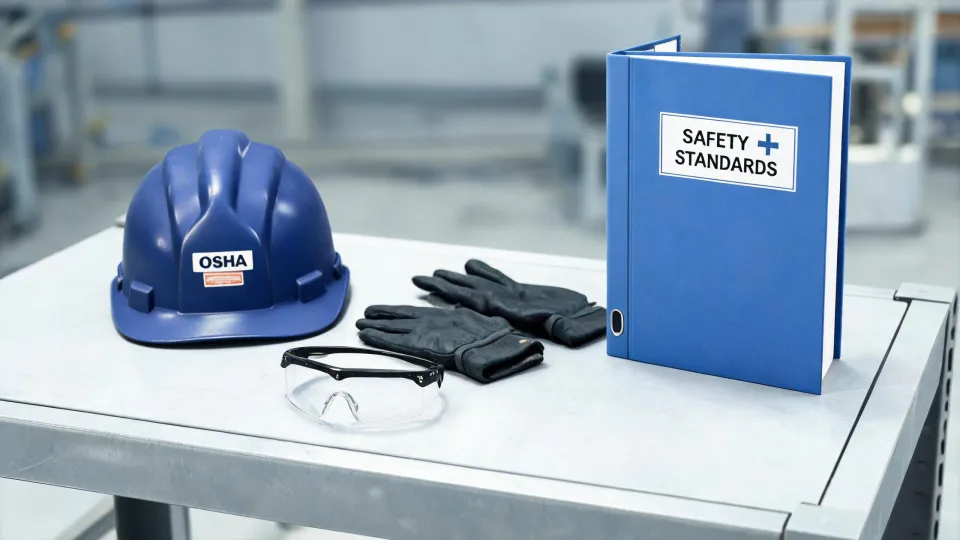
I'm a quality compliance manager in the PPE distribution space. Which is a fancy way of saying I review hundreds of safety items a year—gloves, safety glasses, earmuffs, extinguishers—before they go to customers. It's a job that trains you to be skeptical. These are the six questions I keep seeing in order forms, procurement emails, and safety training sessions.
1. What Are Safety Glasses?
Safety glasses are eyewear designed to protect your eyes from impact, dust, splashes, and flying debris. But 'designed to' isn't the same as 'tested to.' In the U.S., workplace eye protection is covered by the ANSI/ISEA Z87.1 standard. Certified glasses are drop-tested and impact-tested—a steel ball is fired at the lens at high velocity, and the lens has to stay in one piece and stay in the frame.
If you're buying eye protection for a workplace, OSHA requires it to comply with Z87.1, so certified glasses carry a 'Z87' mark on the lens or frame. No marking, no certification. There are plenty of 'tactical' and sport glasses sold next to real safety glasses that don't meet the standard. They're fine for casual use. Not fine for a worksite.
For most industrial tasks, look for Z87+ (high impact) or at least side shields. A good chunk of eye injuries come from the side, not straight on.
2. What Is Magid Glove & Safety?
Magid Glove & Safety is a PPE manufacturer and distributor based in Chicago, Illinois. They've been making safety products since 1946—longer than most of the standards we use today. For anyone looking for the Magid Glove & Safety official website, it's magidglove.com. That's where you'll find product specs, SDS sheets, and authorized distributor information.
What separates them from a typical supplier is that they own glove manufacturing facilities. That means they control the sourcing, production, and quality checks on their glove lines. For buyers, that consistency matters. When you're ordering 50,000 pairs for a plant, you need the next batch to behave like the last one.
Beyond gloves, Magid distributes safety glasses, hard hats, coveralls, respirators, hearing protection, and fire extinguishers. (Honestly, their glove lineup is what I see most in our shipments—and that's for good reason.)
3. What Is the Magid Glove & Safety GPD700-10?
This product number shows up in my inbox a lot. The GPD700-10 is a general purpose work glove from Magid. The '-10' is the size—size 10, which is a large.
These are the gloves you grab for material handling, inspection, light assembly, and general warehouse tasks. They're coated for grip and they balance dexterity with durability better than a cheap uncoated glove. If I remember correctly, the coating is a synthetic material designed for dry and slightly oily grip, but don't quote me on the exact micron thickness—I'd have to pull the data sheet.
The important distinction for buyers: this is a general purpose glove, not a cut-resistant or chemical glove. Every now and then, a buyer assumes any coated glove will stop a knife blade. It won't. Match the glove to the task.
4. Are UGG Earmuffs Good Hearing Protection?
Short answer: no. And I get why people ask—they're warm, comfortable, and they look nicer than most industrial hearing protection. But UGG earmuffs are cold-weather accessories. They don't have a Noise Reduction Rating (NRR).
In the U.S., hearing protection devices have to be labeled with an NRR number that tells you how much sound they actually block. Even basic foam earplugs have an NRR around 30 dB. Decent earmuffs range from roughly 22 to 30+ dB. UGG earmuffs block essentially nothing except wind chill.
If someone wears them in a noisy warehouse assuming they're protected, that's a training gap—and it's on us in safety to clear it up. Need warmth and protection? Use real hearing muffs. They make cold-weather models with insulated cups. Not as stylish, but tested to do the job.
5. What Is a Halotron Fire Extinguisher?
A Halotron fire extinguisher uses a clean agent called Halotron, which replaced Halon in many applications. Halon was phased out of production in the mid-1990s because it depleted the ozone layer. Halotron does the same job—interrupting the chemical chain reaction of fire—with far less environmental impact.
Its main advantage: no residue. Dry chemical extinguishers coat everything in a corrosive powder that destroys electronics. Halotron leaves nothing behind, which makes it ideal for server rooms, control rooms, labs, and anywhere electronic equipment can't easily be replaced.
The trade-offs are real. Halotron units cost more than dry chemical, and they discharge faster, so sizing matters. They're rated for Class A, B, and C fires. But they aren't the answer to every fire risk—match the extinguisher to the specific hazards in the room.
I didn't appreciate the value until I audited a facility that used a dry chemical extinguisher in a control room. The fire went out in seconds. But the residue destroyed every circuit board in the room. The fire was a minor loss. The replacement hardware was a major capital expense.
6. How Do I Verify That PPE Actually Meets the Standard?
This is the question nobody thinks to ask—until they've been burned. I've been burned. Assuming the label is true isn't a verification strategy.
Three checks I run on every PPE line:
- Look for the marking on the product itself, not just the packaging. Safety glasses have Z87 on the lens. Gloves carry the EN 388 or ANSI/ISEA 105 shield with performance numbers. Earmuffs have the NRR printed on the product. If the marking isn't there, treat the product like it isn't certified.
- Match the certified level to the hazard. A glove can be ANSI cut level A1—and that's 'certified.' It's just not certified for cutting. Understand what the number means before you rely on it.
- Ask for the test report. Reputable manufacturers provide third-party documentation on request. When I implemented our verification protocol in 2022, this requirement alone flagged two suppliers who claimed compliance but couldn't produce a single test report. The numbers on paper said their products were fine. The absence of documentation said otherwise.
Everything I'd read about buying PPE said to stick with brand names and you're safe. In practice, I've learned that markings and test documentation matter far more than the logo on the package. A certified glove from a brand you've never heard of beats an uncertified glove from a famous one. That's a lesson better learned in the receiving bay than after an incident.

Jane Smith
I’m Jane Smith, a senior content writer with over 15 years of experience in the packaging and printing industry. I specialize in writing about the latest trends, technologies, and best practices in packaging design, sustainability, and printing techniques. My goal is to help businesses understand complex printing processes and design solutions that enhance both product packaging and brand visibility.
Leave a Reply