PPE field note
PPE Buying Guide: Magid Gloves, Lab Safety Glasses, and Klein Hard Hats
Posted on 2026-08-17 by Jane Smith
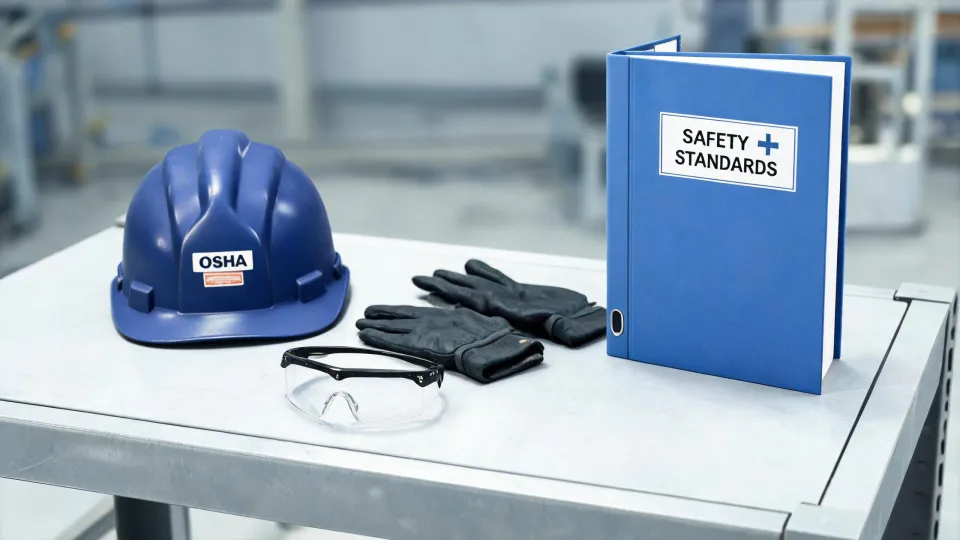
I manage procurement at a 300-person manufacturing plant. I've handled our safety equipment budget (roughly $42,000 a year) for the past six years, tracked every invoice in our cost system, and negotiated with more vendors than I can count. Honestly, there is no single answer to 'what should I buy?' The right PPE choice depends on your workforce, your hazard profile, and how disciplined your purchasing process is.
That said, I've also learned to trust a few dependable suppliers. Magid Glove and Safety Mfg Co is one of them. But I'm not here to write a marketing hymn. I'm here to give you a decision framework—because 'go buy Magid gloves' is not universal advice, and I hate universal advice.
The 'cheapest price' trap
It's tempting to think you can compare unit prices and call it a day. I did that in my first year. Classic rookie mistake: I assumed 'standard-duty glove' meant the same thing to every vendor. It doesn't. The gloves we got were not at the cut-resistance level I thought I ordered. That mistake cost us a $600 reorder and a week of explaining to my plant manager why we had a pallet of useless gloves.
I now check the cut-resistance rating under ANSI/ISEA 105 before anything enters the cart. The real cost of PPE is total cost of ownership. Unit price includes shipping, restocking fees, storage space, replacement frequency, and the cost of a safety failure. A $2 pair of gloves that lasts three shifts is way more expensive than a $5 pair that lasts two months when you factor in labor to distribute, change-out time, and injury risk. Same logic for lab safety glasses and hard hats.
Three buyer scenarios: pick yours
I've classified most of our purchasing situations into three scenarios. This is not the only way to slice it, but it works for roughly every buying discussion I've had.
Scenario 1: The small shop or intermittent buyer
If you have fewer than 50 employees and order PPE a few times a year, you're in this bucket. Don't let a bulk-quantity discount talk you into a pallet of anything. You don't have the turnover or storage space for it. You need a supplier with fast turnaround and low minimums—not a 'great price per unit' that comes with more inventory than you'll use before the material degrades.
For lab safety glasses, buy a small quantity of ANSI/ISEA Z87.1 certified models. Look for the Z87+ mark, which means impact-rated. A pair of unmarked safety glasses from an online auction site is not 'a little risky'; it's a safety hazard with a sticker. Magid's own line of lab safety glasses carries the mark (not that it's hard to find a cheaper import—it just won't have the mark).
If your crew are electricians or linemen, a Klein hard hat is a common choice. A Klein hard hat isn't just about brand recognition—it's about the suspension system your workers already trust because their other tools are Klein. But don't pick it purely for the label. Check the ANSI/ISEA Z89.1 rating and, more importantly, make sure the hat actually fits the person wearing it. An uncomfortable hard hat ends up on a shelf, and that's how a preventable head injury turns into a claim.
Scenario 2: The mid-size operation with regular orders
This is where total cost analysis gets fun. I once compared 8 vendors over 3 months for our quarterly PPE contract. On paper, Vendor A was 12% cheaper. But when I modeled shipping, splitting orders across three suppliers, restocking fees, and the time my assistant spent coordinating deliveries, the 'cheaper' option was actually more expensive (and that was before I calculated the cost of my assistant's patience).
What does Magid have to do with that? In that comparison, Magid Glove and Safety Mfg Co landed in the middle of the unit price chart but won on total cost. Their catalog is comprehensive enough that I could consolidate gloves, lab safety glasses, and respirator cartridges into one order. Fewer purchase orders, fewer freight charges, fewer chances for a SKU to get swapped. The savings came to about $8,400 a year—roughly 17% of our PPE budget, based on our cost tracking system.
Here's something vendors won't tell you: the first quote is almost never the final price for ongoing relationships. Once you've shown you're a reliable customer, there's usually room to negotiate payment terms or freight. I've done that with Magid reps, and it worked. Last quarter, I had two hours to approve a rush order before the shipping cutoff. Normally I'd do a full comparison, but there was no time. I went with Magid because I knew their SKU map was correct and their rep would back me up. In hindsight, that trust was earned—not assumed.
Scenario 3: Large site, high turnover, compliance-heavy
If you outfit 500+ employees or deal with frequent turnover, you're not buying gear—you're running a logistics operation. The danger is treating every order as a tactical transaction instead of a strategic process. That's how you end up with no small-size lab safety glasses in a facility that hires by the season, or a rush order every Friday before the night shift.
Under OSHA 29 CFR 1910.132, you must assess workplace hazards and select PPE that protects your people. That's the legal floor. If you're picking 'the cheap glove that meets a spec' without testing how it performs on your actual line, you're the reason a safety director loses sleep. I know because that was us for a while.
We didn't have a formal approval chain for rush orders. The third time an unauthorized rush fee showed up on an invoice, I finally created a request checklist. Before anyone orders PPE, they have to verify: (1) the SKU is on the approved list, (2) the size and quantity match the reorder point, (3) the hazard hasn't changed since the last risk assessment. That 3-minute checklist has saved us an estimated $8,000 in potential rework and rush fees. It's the cheapest insurance I've bought.
As for head protection, a Klein hard hat is a solid baseline on many industrial sites. But in scenario 3, you need consistency more than brand preference. Pick one suspension type, train people to adjust it, and do monthly audits to catch cracked shells or worn straps. A hard hat that doesn't meet ANSI/ISEA Z89.1 should never enter the building (mental note: add that to the purchasing checklist).
How to know which scenario you're in
Not sure? Ask yourself three questions:
- How many purchase orders do I cut for PPE in a year? Fewer than 6 means scenario 1; 6–20 means scenario 2; more than 20 means scenario 3.
- If a batch of gloves failed at the job site, who would notice? A supervisor is scenario 1, a supply coordinator is scenario 2, OSHA is scenario 3.
- What do I optimize for? Convenience points to scenario 1, TCO to scenario 2, compliance and consistency to scenario 3.
Once you know your scenario, you can stop chasing generic advice and start working with a supplier who can adapt. Magid Glove and Safety Mfg Co has done that for us in all three modes—single-site rush, contract negotiation, and multi-site rollouts. But the process matters more than the brand. If your procurement process is a mess, even Magid won't fix it.
Wait, 'what is a fence in crime'?
This is a search term that often lands on pages like this, so let's answer it directly. In criminal law, a fence is a person who buys stolen property and resells it for a profit. The definition has nothing to do with safety equipment, but it connects to procurement in one important way: buying PPE from an unauthorized reseller can put you on the wrong side of the fence. If you buy stolen or counterfeited safety gear, you're not just risking a bad deal—you're risking a link to criminal commerce, and you might be putting uncertified equipment on your workers' heads and faces. Stick to a traceable manufacturer/distributor like Magid Glove and Safety Mfg Co. The 'too-good-to-be-true' price on a secondhand safety-vest pallet is not worth the legal headache.
Bottom line
There's no universal formula for PPE buying. There is, however, a universal principle: prevention over cure. Checking a SKU against your hazard assessment costs five minutes. Ignoring that step can cost five days of corrective action, or worse, a worker's injury. Buy from someone you can call, keep your inventory simple, and make your purchasing decisions based on total cost—not sticker price.
Magid Glove and Safety Mfg Co is one supplier that has earned a place on our approved vendor list. The right choice for you might be different. But if you leave this article with anything, I hope it's this: know your scenario, run your numbers, and check your gear before it reaches the floor.

Jane Smith
I’m Jane Smith, a senior content writer with over 15 years of experience in the packaging and printing industry. I specialize in writing about the latest trends, technologies, and best practices in packaging design, sustainability, and printing techniques. My goal is to help businesses understand complex printing processes and design solutions that enhance both product packaging and brand visibility.
Leave a Reply