PPE field note
The Real Cost of Cheap PPE: Why Your Gloves Are Costing You More Than You Think
Posted on 2026-07-28 by Jane Smith
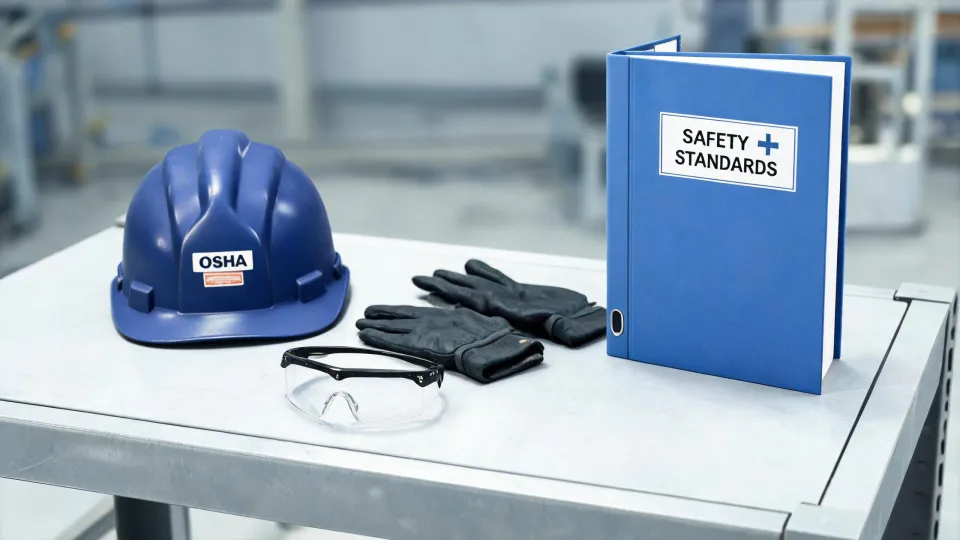
I Used to Think 'Cheapest' Was Smart Procurement
Honestly? I started out buying the cheapest work gloves I could find. It felt like good business. Lower unit cost, lower spend, boss is happy. That was about six years ago, back when I was still learning the ropes of managing a safety budget for a mid-size manufacturing plant.
But here's the thing I didn't understand then: the actual cost of a glove isn't the price tag. It's the cost per hour of wear. And I learned that the hard way.
The Surface Problem: Everyone Wants the Lowest Price
If you're in procurement for a factory or a construction outfit, you know the drill. Your internal stakeholders—the safety manager, the plant floor supervisor—they all want the best protection. Your finance team wants the lowest cost. You're stuck in the middle.
The easy answer is to go with the lowest bid. You compare quotes for a few different safety glasses or a case of hearing protection, pick the cheapest, and move on. I did this for my first year. It felt efficient. It wasn't.
The biggest mistake? Treating all PPE like a commodity. A glove is not just a glove. A safety glass is not just a piece of plastic. They have different lifespans, different comfort levels, and those differences add up fast.
What I Found When I Started Tracking
After about two years in the role, I had a bit of a crisis. Our PPE budget was blowing up. We were constantly reordering. I couldn't figure out why until I actually sat down and pulled the data from our procurement system.
What I found surprised me. The cheap gloves? They lasted about a shift and a half. The guys on the line hated them. They'd get rips, they'd lose dexterity, and they'd get thrown out halfway through the day. So instead of one pair per worker per week, we were burning through three or four pairs. The math changed immediately.
That's when I realized the real problem wasn't the price of the glove. It was our buying strategy.
The Deep Cause: We're Measuring the Wrong Thing
The surface problem is cheap PPE. The deeper issue is how we measure cost. Most procurement teams, especially in safety, are stuck in a unit-cost mindset. You get a quote for 500 pairs of gloves at $2.00 each. You get another for $1.50 each. You pick the $1.50. Simple, right?
But here's what's missing:
- Lifespan: How many hours does the product actually last?
- Compliance: Will workers actually wear it? If it's uncomfortable, they won't, and then you've bought nothing.
- Inventory waste: What if the sizing is off? Or the product changes?
- Admin overhead: Every purchase order, every delivery check, every return—it all costs time and money.
I didn't fully grasp this until a vendor failure in early 2023. We had a supplier for our standard safety glasses. They were cheap, about $1.20 a pair. They were fine, not great. Then one order arrived and the arms were brittle. They snapped on half the frames within a week. We had to replace 300 pairs. The reorder cost us, plus the time to inspect, return, and reissue. It was a mess.
That event changed how I think about supplier relationships. I used to think a vendor was a vendor. Now I know that the cost of a bad vendor isn't just the product—it's the headache, the downtime, and the safety risk.
The 'Hidden Fee' Trap
I see this all the time in B2B procurement. A vendor offers a per-unit price that looks amazing. But then you add on shipping (not always included for small orders), minimum order quantities that force you to overstock, and the risk of inconsistent quality. The total cost is almost always higher.
In Q2 2024, I compared costs across 4 vendors for medium-weight work gloves. Vendor A quoted $1.80 per pair. Vendor B quoted $1.35. I almost went with B until I calculated the total cost of ownership. Vendor B charged $30 for shipping on orders under $500, and their minimum order was 200 pairs. I only needed 100. So I either paid the shipping or bought double what I needed. Vendor A's price was higher, but it included free shipping on orders over $100, with no minimum. The total for Vendor A? $180 for 100 pairs, all in. Vendor B? $270 for 200 pairs (plus $30 shipping), which is $1.35 per pair but a total spend of $300. I saved 40% by not picking the 'cheaper' unit price.
That's a 40% difference hidden in the fine print.
The Cost of Not Solving This
If you keep buying the cheapest PPE, here's what happens over time:
- Your budget overruns. You'll spend more on reorders and replacements.
- Your safety score suffers. Uncomfortable or unreliable gear means workers take shortcuts.
- Your team gets frustrated. They stop trusting you to provide good equipment.
- You waste time. Managing bad vendors is a headache.
In my experience, tracking 180 orders over 4 years, I found that about 20% of our budget overruns came from 'cheap' product failures. The irony isn't lost on me.
What Changed My Mindset
I used to buy on price. Now I buy on value. The trigger was a simple spreadsheet I built in 2022. I started tracking cost-per-wear-hour. A $2.50 glove that lasts 50 hours costs $0.05 per hour. A $1.50 glove that lasts 10 hours costs $0.15 per hour. The more expensive glove is actually 3x cheaper. It's a simple equation, but it's one most people skip.
I built a cost calculator after getting burned on hidden fees twice. Now I use it for every new vendor evaluation. It's not fancy. It's just a template with fields for unit cost, lifespan, shipping, minimum orders, and return rates. But it's saved us thousands.
The Simple Solution (It's Not What You Expect)
So what's the answer? It's not just 'buy expensive stuff.' That's lazy thinking too.
The real solution is to measure what matters: total cost per unit of protection per hour of use.
Some practical steps I've taken that worked:
- Ask for samples. Before committing to a bulk order of any new work glove or safety glass, get a sample. Let your team test it for a week. You'll learn more from that than from any spec sheet.
- Track returns and failures. If a product has a defect rate over 2%, it's probably costing you more than you think.
- Build relationships with suppliers that stock depth. A vendor like Magid, with in-house manufacturing and a broad range, can often give you better consistency and support than a middleman who just resells commodity goods.
- Negotiate on terms, not just price. A longer payment window or free shipping is often more valuable than a penny off the unit cost.
Bottom line? The cheapest PPE is almost never the cheapest. I learned that lesson over years and about $180,000 in tracked spending. You don't have to wait that long. Start with the TCO spreadsheet. It works.
Pricing as of Q1 2025; verify current rates with suppliers.

Jane Smith
I’m Jane Smith, a senior content writer with over 15 years of experience in the packaging and printing industry. I specialize in writing about the latest trends, technologies, and best practices in packaging design, sustainability, and printing techniques. My goal is to help businesses understand complex printing processes and design solutions that enhance both product packaging and brand visibility.
Leave a Reply