PPE field note
Are Nitrile Gloves Food Safe? What 248 Rush Orders Taught Me About Magid Glove & Safety
Posted on 2026-08-06 by Jane Smith
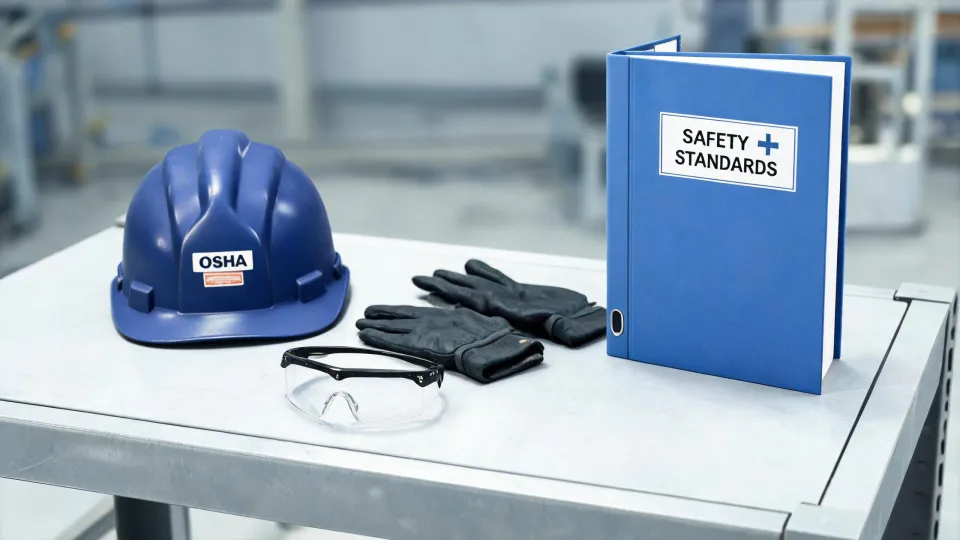
Are nitrile gloves food safe? Yes, if the glove is labeled food-safe and meets FDA food-contact rules. That's the short answer, but it isn't the whole answer. I've spent 7 years buying PPE for a food-equipment manufacturer, and I've placed 248 rush orders—maybe 249 if you count the one I sent this morning. Along the way, I learned to read labels like a lawyer, send a proper safety goggles drawing with every custom order, and apply what I call the dog fence rule. And I've become a repeat customer of Magid Glove and Safety Manufacturing Company.
From the outside, a rush order looks like a simple math problem: order now, ship faster. The reality is that rush orders are won or lost before the phone call. They depend on inventory, approved specs, and a supplier who picks up. That's why my browser autofills 'magid-glove' with a hyphen. I use the Magid Glove & Safety official website so often that I don't even type the full name anymore.
In my role coordinating PPE for plant shutdowns and audit windows, I care about three things in order: time, feasibility, and risk. If a supplier can't prove the product exists in inventory, the deadline doesn't matter. If the spec sheet is missing, the price doesn't matter. And if the certification is expired, nothing else matters. That's the filter I run every order through.
Why the Official Website Matters
The Magid Glove & Safety official website isn't just a catalog. It's a compliance shortcut. I can open a spec sheet, grab the current SDS, and verify a product code in less than a minute. When a client calls at 3 p.m. and needs gloves by Friday, that speed matters.
I'm not saying the phone is dead. Sometimes a real person is faster. But digital specs make fewer mistakes. What I mean is: I can attach the exact safety goggles drawing and the exact certification to a purchase order, so there's no argument about what we agreed to later.
Are Nitrile Gloves Food Safe? What the Label Tells You
Are nitrile gloves food safe? Only when the manufacturer says so. The FDA regulates food-contact materials, and for rubber materials the regulation most often cited is 21 CFR 177.2600. That's not a marketing phrase; it's a compliance requirement. A blue nitrile glove does not automatically mean food-grade. I made that mistake in my first year of buying, and it cost a client a sanitizer test failure.
People assume the color of the glove tells you the use. What they don't see is the testing behind the label. Some food-safe nitrile gloves are blue, some are white, and some are black. The label is the truth. If you're asking 'are nitrile gloves food safe' because you're dealing with a food plant, look for 'food-safe' or 'food-grade' on the box or spec sheet. If it isn't there, ask for the certificate. Don't take a salesperson's word.
The Dog Fence Rule
Here's the counterintuitive part. A dog fence and a pair of nitrile gloves fail the same way: they fail when you buy the wrong product for the boundary. A dog fence isn't good because it's tall or cheap. It's good if it actually keeps your dog in. A glove isn't good because it's nitrile or blue. It's good if it matches the chemical, the task, and the required standard.
A few years ago, one of our plant managers decided to install a fence around the maintenance yard. He bought standard leather work gloves and started pulling chain-link wire. He came back with cuts on both hands. The gloves weren't defective. They were the wrong gloves for the job. The same logic applies when you're handling food-safe nitrile gloves near sanitizers. Food-safe doesn't mean chemical-resistant. It means safe for food contact, not safe for every chemical. If you're using a strong sanitizer, you need a glove with a chemical compatibility chart, not just a food label.
The Safety Goggles Drawing That Saves Orders
Another search term I see a lot is 'safety goggles drawing.' Buyers use it when they need an approved equipment list, a safety sign, or a custom goggle order. I learned early that a drawing matters more than a photo. A photo shows what a product looks like. A drawing shows what a product must be.
Now I send a proper safety goggles drawing for any custom eye protection: front view, side view, lens curvature, vent placement, and impact rating. According to ANSI/ISEA Z87.1-2020, impact-rated goggles have to pass a drop-ball test. If the drawing doesn't reference that standard, you're asking for a bell with a strap. And if the drawing goes into a printed spec sheet, send it at 300 DPI at final size. That's the standard for commercial printing. For color, use a Pantone reference if you have one—but ask for a physical sample too. Molded plastic doesn't always look like ink on paper.
What 248 Rush Orders Taught Me
I keep coming back to Magid Glove and Safety Manufacturing Company for one reason: they make the math easy. Their factory-direct model means they pull from production, not just a warehouse. Their product pages on the Magid Glove & Safety official website have current specs and SDS links. When I need an urgent order, I can check inventory, print the spec, and send a purchase order without calling. Switching to the electronic spec process cut our turnaround from 5 days to 2 days.
That's not a blanket endorsement. I've tested other suppliers, and some are good at specific products. But for a wide range of PPE with in-house manufacturing, Magid is the one that doesn't turn a one-day order into a crisis. The bottom line: if I don't have a clear drawing, a current certification, and a lead time that matches the risk, I don't care how good the price is.
The upside of a discount supplier can be thousands of dollars. The risk is a missed deadline that shuts down a plant. I've weighed that trade-off more than once, and the math usually says pay the rush fee and keep the relationship. Last quarter we paid $850 in expedited fees on a $14,000 glove order. It hurt. But the client's alternative was a line stoppage that would have cost a lot more.
When This Advice Doesn't Apply
Here's the boundary condition, and I think it's as important as the answer. Food-safe nitrile gloves are not automatic chemical-resistant gloves. A safety goggles drawing doesn't replace a certificate of compliance. A rush order only works if you have completed specs and a supplier with inventory. And the dog fence rule doesn't mean you should buy cut-resistant gloves for every fence job. Sometimes standard gloves are fine. You match the product to the task, not to a slogan.
Also, regulations change. Verify current requirements on the FDA or OSHA website before you rely on a 21 CFR number. Products change too. The 'magid-glove' shortcut in my browser gets me to the current Magid Glove & Safety official website, but I still check the latest SDS before every order. That's not paranoia. It's how you avoid the 249th order being the one that teaches you a lesson.

Jane Smith
I’m Jane Smith, a senior content writer with over 15 years of experience in the packaging and printing industry. I specialize in writing about the latest trends, technologies, and best practices in packaging design, sustainability, and printing techniques. My goal is to help businesses understand complex printing processes and design solutions that enhance both product packaging and brand visibility.
Leave a Reply