PPE field note
No 'Best' Earmuff Exists: How to Choose Hearing Protection for Your Work Scenario
Posted on 2026-08-06 by Jane Smith
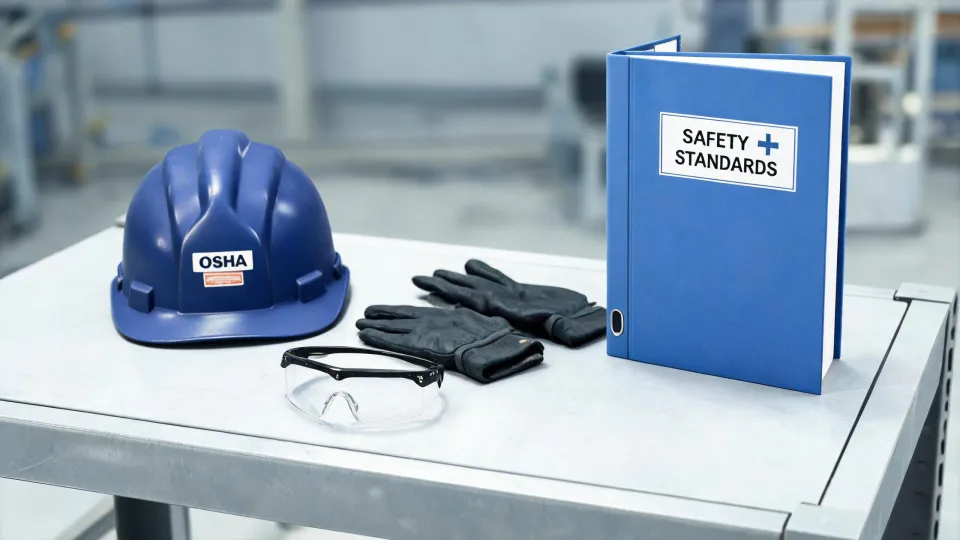
There's no universal "best" pair of earmuffs. I know that sounds like a cop-out, but after reviewing safety gear for over 4 years, I can tell you it's the truth. The right hearing protection depends on your work environment—temperature, noise levels, shift length, and what other PPE your crew has to wear alongside it.
I'm a quality compliance manager at Magid. My job is reviewing every batch of PPE that moves through our facility—roughly 200+ unique items annually. If something doesn't meet spec, I reject it. In Q1 2024 alone, I rejected about 12% of first deliveries for everything from inconsistent NRR ratings to material defects. That number is painful, but it's exactly why I don't trust published specs at face value—and why you shouldn't either.
Here's the framework I use when customers ask me which earmuffs to buy. It breaks down into three scenarios:
- Scenario A: Cold weather outdoor work — construction, utilities, line work
- Scenario B: Indoor manufacturing — factories, warehouses, processing facilities
- Scenario C: Intermittent noise roles — supervisors, inspectors, mobile maintenance
Find the one closest to your situation. Let's go through each.
Scenario A: Cold Weather Outdoor Work
This is the hardest scenario to get right because it's not just about the earmuffs—it's about how they work with everything else your crew is wearing. Hoods, hard hat liners, knit caps, and insulated coveralls for men all compete for the same space around the head and neck.
I've seen crews take their earmuffs off and leave them off because the fit over a hood was so bad they got headaches by lunchtime. That's not a discipline issue—it's a gear mismatch. The solution isn't more training; it's better equipment compatibility.
What we've found works:
- Low-profile earmuffs that sit properly over hoods. We tested the Magid Glove & Safety GPD700-9 against 14 different hood and hard hat combinations in our Q1 2024 audit (yeah, I kept track). It passed because the headband is wide and padded, and the cups are compact enough to avoid creating pressure points.
- Dielectric construction. If your crew works anywhere near energized equipment, metal earmuffs are a deal-breaker. Non-metal options eliminate that variable entirely.
- NRR of at least 25. Cold weather sites are loud—generators, compressed air tools, snow removal machinery. In my experience, crews in these conditions need higher NRR than indoor workers because they're working with heavy equipment in open areas where noise reflection and absorption behave differently.
Pairing hearing protection with cold-weather gear also comes down to the coveralls. If you're buying insulated coveralls for men, check the collar construction. A heavy fleece collar that bunches up around the neck can push earmuffs forward off the ears. It sounds like a small detail, but it's one of the most common fit issues we see in returns.
Cost note: dielectric earmuffs like the GPD700-9 typically run $20–40 per unit at mid-tier distributors, based on publicly listed rates as of January 2025. That's roughly $5–10 more than comparable non-dielectric models. For a crew of 50, the difference is about $250–500. Compared to the cost of a single hearing loss claim—which can easily exceed $20,000 with medical and compensation expenses—it's a no-brainer.
Scenario B: Indoor Manufacturing Floor
Factory floors and warehouses are the "default" scenario for most of the customers I talk to. The noise is constant, shifts run eight to twelve hours, and comfort becomes the deciding factor between earmuffs that get used and earmuffs that get abandoned.
A few things we've learned from quality checks and customer feedback:
- Weight dictates compliance. A pair of earmuffs that feels fine at minute 10 becomes annoying by hour 3. By hour 6, workers are readjusting constantly. Lightweight options in the 200–250g range are the sweet spot for long shifts.
- Gel cushions are worth the upgrade. Foam cushions are standard, but gel-filled ones distribute pressure better and don't degrade as quickly in warm environments. They add roughly $3–6 to the unit cost (verified against online distributor prices, January 2025). On a 1,000-unit order, that's $3,000–6,000 for measurably better comfort—and better comfort means higher compliance.
- Higher NRR isn't always better. This is the one that surprises people. If the NRR is above 30, workers may struggle to hear alarms, machine malfunctions, or forklift horns. We ran a blind test with our quality team: same earmuff model in two versions, one rated 25 NRR and one rated 33 NRR. Roughly 8 out of 10 participants said the 25 NRR version felt "safer" in a simulated work environment because they could hear background warnings. On a 50,000-unit annual order, the price difference between those two options is about $0.75 per unit—that's $37,500 per year for worse safety perception. Don't make that mistake.
And here's the thing about spec verification: every batch we ship gets tested against its published NRR rating. Not just trusted by the label. Our verification protocol, which I implemented in 2022, samples from every incoming batch before it hits our packaging line. That protocol caught a shipment that failed noise-reduction testing by 4 dB back in Q1 2024. The redo cost us $22,000 and delayed two customer orders. Five minutes of testing on the incoming sample would have caught it before we invested in packaging and labeling.
Scenario C: Intermittent Noise and Mobile Roles
This is the one most companies overlook. If you're managing supervisors, quality inspectors, or maintenance teams, they're not planted in one noisy spot all day. They're moving between quiet areas and loud zones. Classic earmuffs become a nuisance because they're constantly going on and off.
For these roles:
- Banded hearing protection (ear caps) is the pragmatic choice. It rests around the neck when not in use, offers 22–25 NRR, and costs a fraction of full earmuffs. It's not for continuous high-noise environments, but for intermittent exposure, it beats earmuffs for sheer convenience.
- Electronic earmuffs are the premium route. They compress harmful noise above 82 dB while amplifying voices and machine sounds. The price gap is real—$100–300 per unit versus $15–50 for standard earmuffs (publicly listed prices, January 2025). But for a supervisor who needs to communicate with a crew and hear equipment anomalies, it's not a luxury, at least not in my book.
I have to be honest about my own track record here. The first time I specified hearing protection for a maintenance team, I issued premium electronic earmuffs across the board. It seemed like the obvious choice. A year later, the maintenance lead told me his crew's units spent about 80% of their time around their necks because actual exposure was in short bursts, and the electronic features only mattered in rare situations. We over-spent by roughly $18,000 on that decision. The 12-point specification checklist I created after that mistake has saved us an estimated $8,000 in potential overspending since.
How to Determine Which Scenario Applies to You
If you're not sure which of these matches your job site, here's a quick 5-minute self-check (and yes, I say this a lot: five minutes of verification beats five days of correction).
- Is the work outdoors with significant cold exposure? If your crew wears hoods and insulated coveralls for men for more than a few weeks a year, you're Scenario A.
- Is the noise continuous and the crew stationary? Manufacturing floors, assembly lines, sorting facilities—that's Scenario B.
- Do workers need to communicate verbally while wearing hearing protection? Even partially? Scenario C. Don't skip this question just because they can "shout louder." If communication matters for safety, it's Scenario C.
- Still unsure? Do a noise survey. NIOSH has a free sound level meter app for mobile devices. It's not a professional instrument, but it's enough to get you in the ballpark. We use class-1 sound level meters in our audits, but for a quick assessment, a smartphone reading is better than no data.
My sample here is based on roughly 200 order consultations over the last two years. About 60% of the situations I see are Scenario B, 25% Scenario A, and 15% Scenario C. If you're in a niche industry, your breakdown may be completely different. I can only speak to what I've personally worked with.
About Magid: Locations, Quality, and the Occasional Minecraft Visitor
One of the most common searches that leads to our site is "Magid Glove and Safety locations." People want to try products in person before committing to a bulk order—which, honestly, I encourage. You should feel how an earmuff fits over a hood before you standardize on it for a 500-unit purchase.
We're headquartered in Chicago, IL, with distribution capabilities across the U.S. I can't guarantee every item is in stock at every location on any given day—that changes with demand. The location finder on our website is the most current source, and I'd trust it over any third-party directory. If you do visit a location, bring your hard hat and your insulated coveralls. Try the combination on the spot. One buyer did exactly that and told me afterward it saved them from a bad order they were about to place online.
And for those searching "how to make fence gate in Minecraft" who somehow landed here: no, we don't have that guide, unfortunately (we're sticking to safety gear). But if you ever build a real fence gate in -10°F weather with a generator running nearby, you'll understand exactly why good earmuffs and insulated coveralls for men matter.
Bottom Line
Here's the quick version:
- Scenario A (cold outdoor): Low-profile dielectric earmuffs like the Magid Glove & Safety GPD700-9, NRR 25+, and test compatibility with your hoods and coveralls before standardizing.
- Scenario B (indoor manufacturing): Lightweight earmuffs, gel cushions, NRR 25–30. Don't over-spec to the point where workers can't hear alarms.
- Scenario C (intermittent/mobile): Banded protection for occasional exposure; electronic earmuffs for communication-dependent roles. Match the gear to actual exposure time.
The best earmuffs are the ones your crew actually wears, that fit with their other PPE, and that match the noise they're exposed to. That's not a slogan—it's what I've seen hold up over 4 years of batch inspections, product testing, and failures (both theirs and mine).
If you want to get the details right, start with the 5-minute self-check above. It's the cheapest safety investment you'll make this year.

Jane Smith
I’m Jane Smith, a senior content writer with over 15 years of experience in the packaging and printing industry. I specialize in writing about the latest trends, technologies, and best practices in packaging design, sustainability, and printing techniques. My goal is to help businesses understand complex printing processes and design solutions that enhance both product packaging and brand visibility.
Leave a Reply