PPE field note
I Review PPE for a Living. The Cheapest Option Is Usually the Most Expensive One.
Posted on 2026-08-12 by Jane Smith
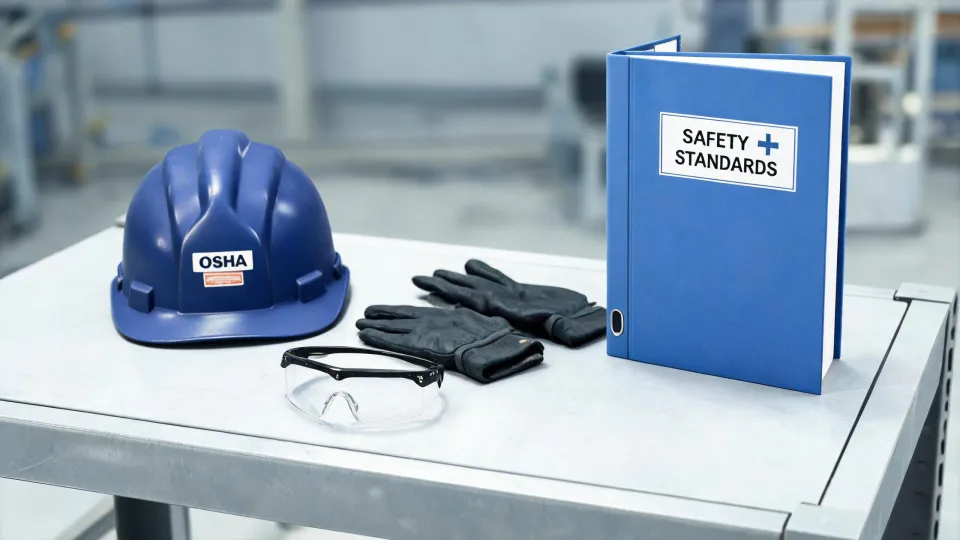
I've rejected $80,000 worth of safety products in the past year. Every rejection was preventable. None of them had anything to do with the price tag.
I'm a quality compliance manager at Magid. My job is to review what we make and sell before it reaches people who are trusting it with their hands, eyes, and lives. That's roughly 200+ unique items annually—gloves, safety glasses, hard hats, coveralls, respirators, security equipment. In 2024, I rejected 12% of first-article submissions because the production samples didn't match the contracted spec. Sometimes the deviation was obvious. Usually it wasn't. That's what made it dangerous.
Here's the thing: the cheapest PPE is rarely the least expensive PPE. That sounds like a paradox, but I've watched it play out in real purchase orders. Hidden variance. Undisclosed material substitutions. Specs that quietly change between the approved sample and the mass production run. None of those show up on the invoice. They show up later, in premature replacements, worker complaints, or worse—avoidable incidents.
So let me share what four years of reviewing safety gear has taught me about buying it.
The 0.4mm Difference That Would've Cost $27,000
Earlier in 2024, we received a production batch of 12,000 units of the magid glove & safety hv200w-10—a high-visibility work glove used by road construction and utility crews. The contract called for a specific polyurethane coating thickness on the palm. The approved sample was perfect. The production run wasn't.
I caught it during a routine caliper check: the coating was 0.4mm below the documented spec. That's roughly the thickness of two sheets of copy paper. Most workers couldn't feel the difference in a 30-second try-on.
But 0.4mm matters in the field. On rough asphalt, it's the difference between a glove lasting three weeks and one wearing through in three shifts. The factory pushed back—"it's within industry tolerance."
Maybe it was. Our spec said otherwise. And the spec was the contract.
We rejected the entire batch. The factory reworked it at their expense. The client never touched a defective glove. But when we calculated the exposure later, we realized what accepting that batch would have meant: roughly $27,000 in warranty claims within four months, plus the quieter damage to a client's trust. Instead, that client still uses the HV200W-10 today.
Manufacturing In-House Means Fewer Disconnects
This is the reason magid glove and safety manufacturing capacity matters to me personally. When we produce PPE in our own facilities, the spec doesn't pass through three layers of subcontractors before it becomes a product. It stays where we can measure it and enforce it.
When you look up the magid-glove series in our catalog, you'll find test dates, batch numbers, and certificate references attached to each run. That's not a sales feature. It's a quality trail.
I'm not naive enough to say in-house equals flawless. But the failure modes are different. When a spec deviation happens in our own plant, I can walk onto the floor and watch the corrective action happen in real time. When it happens at a distant supplier, I'm reading an email summary and hoping it matches reality. The distance between the spec and the actual product is where quality problems live.
Outsourced products can still be excellent. When we spec Bulwark coveralls—a brand with a legitimate reputation in flame-resistant clothing—we don't take the arc rating at face value. We verify it. Given that a coverall's job is to hold together in a flash fire, the label is only as good as the test report behind it.
The Process Gap That Taught Me a Hard Lesson
I'll admit: we didn't always have a formal review process for products outside the classic PPE categories. That gap cost us.
A client once asked us to source a Halo dog fence collar for their facility's K9 perimeter. Not standard PPE, but a legitimate safety-adjacent product. We ran basic functional checks—GPS pairing, boundary signals, battery life. All passed. What we didn't do was stress-test the weather-sealing claims the way we would for outdoor-rated safety equipment.
Three months later, after a sustained rain season, several collars failed. The replacement cost was a few thousand dollars. The real cost was the client looking at us and wondering why we hadn't flagged the limitation before they bought.
That lesson produced a new checklist. Now, if we can't verify a claim on any product—PPE or not—we say so in writing before the purchase. The Halo collar situation taught me that transparency isn't only about price. It's about what a product can't do.
CS Gas vs Pepper Spray: An Old Assumption That's Ready to Retire
Another question I get constantly from security teams is CS gas vs pepper spray. The default thinking is usually: "CS is military-grade, so it must be stronger."
That logic comes from an era when OC formulations were inconsistent and genuinely unreliable. In the early 2000s, CS was often the predictably effective choice in riot control.
Modern OC sprays have closed that gap—and in several respects passed it. A properly formulated pepper spray at 10% or higher oleoresin capsicum is typically faster to incapacitate and less affected by a subject's tolerance than CS. CS still has roles where it makes sense, particularly in certain crowd-control scenarios. But the blanket assumption that "CS hits harder" doesn't match what current testing shows.
I'm not a chemist, and I won't pretend to explain the molecular mechanisms. What I can tell you from a QC perspective is that we test the actual canisters we sell—pressure, spray pattern, range, performance at extreme temperatures. Because the product that looks best on a spec sheet isn't always the one that performs best in the field. Ask for the test data on whichever you're considering.
What About Low-Risk Workplaces?
To be fair, I get why procurement managers push back on higher specs. Budgets are real. Not every workplace faces the same hazards.
But the conversation shouldn't start at price. It should start at the risk assessment, then translate into a spec. When you receive a quote, the question shouldn't just be "how much?" It should be "what's included, what's not, and what testing confirms this spec?"
Too often, the "cheaper alternative" turns out to be the same product with a lower rating that wasn't announced. That's not a bargain. That's an unlabeled downgrade. And in PPE, a downgrade can be measured in injuries rather than dollars.
Look, I'm not arguing that higher price equals higher quality. I've seen premium products fail and budget products perform. The real question is whether the product you're buying can prove what it claims. That's the transparency that matters.
Pay for the Spec, Not the Story
When you pick a PPE supplier, you're not just buying a product. You're buying a system of verification. You're buying the confidence that the spec quoted is the spec delivered.
Ask for the test report. Ask for the batch traceability. Ask what happens when a shipment fails inspection. The vendor who answers directly—even when the answer isn't flattering—is worth more than the one who replies with a lower number.
That's the standard I've applied to every review I've done in four years at Magid. It's why I can still look a contractor in the eye and tell them the product we quote is what we deliver.
Transparency isn't a marketing position. In safety gear, it's the only way to buy without playing roulette with people's lives.

Jane Smith
I’m Jane Smith, a senior content writer with over 15 years of experience in the packaging and printing industry. I specialize in writing about the latest trends, technologies, and best practices in packaging design, sustainability, and printing techniques. My goal is to help businesses understand complex printing processes and design solutions that enhance both product packaging and brand visibility.
Leave a Reply