PPE field note
The $8 Cowboy Hard Hat That Turned Into a $14,000 Problem
Posted on 2026-08-11 by Jane Smith
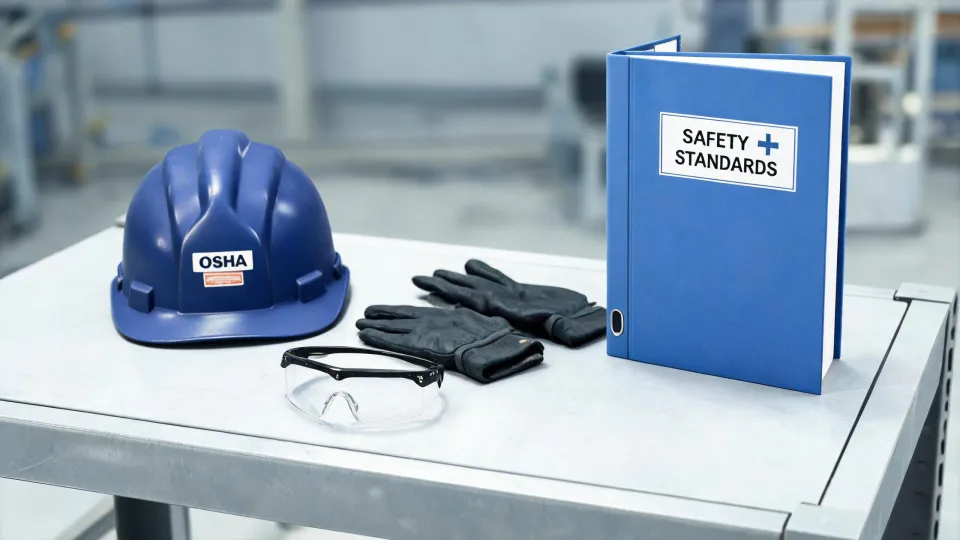
October 12, 2023. I remember the date because I was standing in the middle of our distribution center at Magid Glove & Safety, clipboard in hand, doing a routine audit, when my phone rang. It was a plant manager from a metal fabrication shop in northwest Ohio. We'd quoted him 200 cowboy hard hats back in January. He'd gone instead with a discount supplier who undercut us by $8 a hat. Now he had a different kind of question.
"What are safety glasses, exactly?" he asked. "Like, what makes them different from regular glasses?"
I didn't laugh. To be fair, it's not a dumb question—it means nobody ever walked him through the basics. And that gap had already cost him more than he knew.
That phone call turned into a site visit, and that visit turned into one of the clearest examples I've seen of why "cheaper per unit" is not "cheaper in total."
The hard hats looked right. That was the problem.
For context: at magid glove and safety mfg, we manufacture a big portion of the PPE we sell and source the rest from vetted factories. We're a mfg company first, a trading company second. When I review a product, I can pull its test reports, its material certifications, its entire file.
The cowboy hard hats this manager had bought didn't have a file. They had a screenshot of a product page and an order confirmation.
Walking through his warehouse, I could see the issue immediately. The shells looked nearly identical to the ones we'd quoted. Same cowboy profile, same brim, same four-point suspension. That's the trap. Cowboy hard hats are a niche item, and the visual difference between a $12 hat and a $20 hat is easy to miss on a shelf.
But when I turned one over and squeezed the suspension clip, it snapped between my fingers. Stress marks radiated from the mounting hole—tiny white lines that mean the plastic is already fatigued. Another hat had hairline cracks along the molded edge of the shell. A third had thin spots you could only see when I held a flashlight on the other side. (Should mention: I do this test on our own production line too, on random samples. It's not a special trick—it's basic quality control.)
Here's something vendors won't tell you: hard hat shells degrade over time. UV, heat, even normal wear makes the plastic more brittle. A properly made shell is engineered with enough material and the right polymer blend to stay protective for years. A cut-price shell is made to look exactly like the real thing while removing every gram the manufacturer thinks they can get away with.
"These have been in service four months," he said.
"I can see that." I picked up the hat with the cracked web. "One impact—even a normal drop—and this shell is going to split. And if it splits on the job, the suspension won't save you."
That's when he told me about the guy who'd dropped his hat six feet onto concrete two weeks earlier. Shell cracked clean through. "He wasn't hurt," he said. "But he told me he'd never felt less safe in a hard hat in his life."
The cracked hat was sitting on his desk. It had split along a molding line, and light showed through the hairline fracture. I've seen worse—I've rejected batches with visible voids in the plastic. But not in four-month-old hats that were supposed to be protecting people.
"I saved $1,600 on paper," he said quietly. "Now I'm going to have to replace all 200."
Then we got to the safety glasses
On the way to the floor, he pointed at a bin near the entrance. "Before you go—I asked on the phone about safety glasses. Half my crew wears regular glasses on the job. I've been doing it for twelve years myself. Nobody ever told me different."
He took his glasses off. "These—my eye doctor said they're nearly unbreakable. So what are safety glasses, really?"
I explained it plainly. Regular prescription glasses are made for optical correction, not impact. Safety glasses are tested to ANSI Z87.1—steel balls, high-velocity particles, all in a lab, and they don't shatter. Per FTC guidelines (ftc.gov), products that claim performance benefits have to back it up with evidence. The catch is enforcement: a lot of unbranded imports claim "safety" and never show a test report.
"That's why we publish our certifications," I said. "If someone can't show you the test report, assume it doesn't exist."
He looked at his own glasses, then at the bin of scratched, yellowed safety spectacles left over from some old vending machine contract.
"Nobody's ever told me I can't wear these," he said.
I still kick myself for that. When we quoted him in January, I asked about hard hats, gloves, and eyewear. He said he had the eyewear covered. I didn't push. I assumed he knew what "covered" meant. That's on me.
The fence stain analogy
To help him make sense of the cost, I told him about my neighbor's fence. The guy stained his fence with the cheapest bucket he could find—saved maybe $40 a gallon. Looked fantastic for one summer. By the next spring it was gray, patched, peeling. He spent a weekend pressure washing and re-staining. Total cost: four times the quality stain would have been in the first place.
"Your hard hats are that fence," I said. "The $1,600 you saved went away the moment those hats started degrading. You're about to buy 200 replacements. You're going to pay expedited freight because nobody wants to wait three weeks while a crew loses confidence in their gear. And if you ever get an OSHA inspection with suspect hard hats on the rack, a serious violation citation starts at $5,000."
I ran the rough numbers on the back of a shipping manifest. 200 compliant cowboy hard hats from our line: $4,600. Freight: $650. Labor and downtime to switch out the old gear: $2,000. Potential OSHA citation: $5,000+. Add the unquantifiable—the cost of a head injury that a good hard hat would have absorbed—and "best case" is not an exaggeration.
"So your $1,600 savings turns into a $14,000 problem," I said.
Don't hold me to those exact figures. The point wasn't the precision, it was the order of magnitude. The savings were about two grand any way you sliced it. The exposure was five to seven times that—before you value a head injury at anything at all.
What he did next
The manager ordered 200 new cowboy hard hats that same week. He also ordered prescription-compatible safety glasses for every employee who wore corrective lenses—23 people, including himself. We got him the bulk pricing, the certification documents, and a delivery schedule that didn't leave his crew unprotected while they waited.
"I should've called you in January," he said, "instead of trying to save a buck."
I've told this story to other customers a few times since, especially the ones who ask why our quote is a little higher than the guy on the internet. The answer isn't "we're worth the difference." It's "the difference isn't the price you're paying—it's the risk you're not taking."
Three lessons I keep coming back to
First, the price of a product is not the cost of using it. That $8-per-hat saving evaporated the moment the gear had to be replaced early. In safety products, "if something goes wrong" is doing a lot of heavy lifting, and the "if" always shows up eventually.
Second, the idea that "all hard hats are the same" comes from an era when there were fewer designs and simpler standards. That's changed. Cowboy hard hats, cap styles, full-brim hats—they look similar, but they differ in materials, ratings, and compliance paperwork. They are not interchangeable.
Third, the expert in the room has a responsibility to ask the question the customer doesn't know to ask. "What are safety glasses?" might sound elementary to someone in the industry. But it wasn't a beginner question. It was a real gap in a person's understanding, and it was my job to fill it. I didn't in January. I do now.
We're not always the cheapest option at magid glove & safety company. I'll say it plainly. But when I walk into a plant and see our name on the rack, I know exactly what went into those shells and lenses. That certainty has value. It's just not always on the invoice.

Jane Smith
I’m Jane Smith, a senior content writer with over 15 years of experience in the packaging and printing industry. I specialize in writing about the latest trends, technologies, and best practices in packaging design, sustainability, and printing techniques. My goal is to help businesses understand complex printing processes and design solutions that enhance both product packaging and brand visibility.
Leave a Reply