PPE field note
Cheap vs. Proper Safety Gear: 4 Comparisons That Changed How I Buy
Posted on 2026-08-10 by Jane Smith
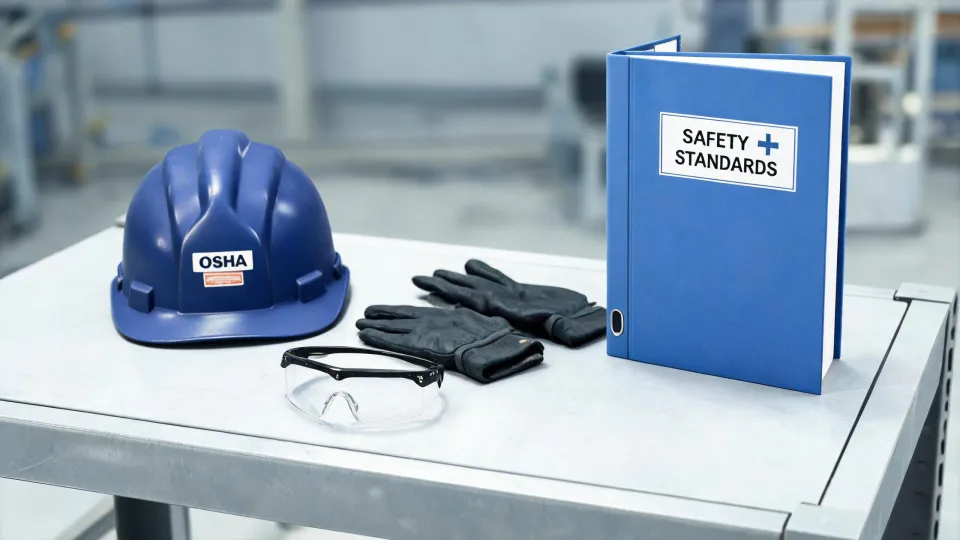
I'm a safety coordinator for a mid-size construction company. I've been handling PPE orders for eight years. I've personally made 11 significant procurement mistakes, totaling roughly $18,500 in wasted budget. That's not a flex. It's the reason I now keep a document called “Mistakes I Won't Repeat.” This article covers four of those mistakes.
The pattern underneath all four was the same. I kept comparing price A vs. price B, when I should have been comparing cheap safety gear vs. proper safety gear. The difference is subtle until it costs you a week of work or, worse, an injury.
Four comparisons that changed how I buy
1. Eye protection: cheap over-glasses vs. prescription safety glasses
In my first year (2017), I made the classic rookie mistake. I ordered 30 pairs of low-cost safety glasses because the price was hard to argue with. They looked like safety glasses. The problem came an hour later: most of our welders and mechanics wear prescription glasses underneath. The over-glasses fogged, pinched, and ended up in the truck. (I should have asked first.)
Over the next few months, 9 of the 30 pairs came back. Nobody wanted to wear them. I thought the crew was being picky. Then I tried a pair myself during a site walk and lasted about twenty minutes.
I didn't know prescription safety glasses existed until a crew member requested them. When I finally ordered a few pairs, people actually wore them. Yes, they cost more. But a safety product that stays in the locker is not protecting anyone.
According to OSHA (29 CFR 1910.133), employers have to make sure workers use appropriate eye protection that meets ANSI Z87.1. If workers can't see clearly or the glasses hurt, they'll take them off. And then the standard doesn't matter.
When I compared the two side by side, I finally understood the real question: what does it cost when something doesn't get used? Cheap over-glasses are a no-brainer for visitors. For daily users, prescription safety glasses are the better call.
2. Site barriers: warning tape vs. temporary fence
In September 2022, I thought I was being clever. I ordered more yellow warning tape to mark an open area near an excavation. Tape is cheap. Tape is fast. Tape is not a barrier.
A delivery driver walked around the tape to find a supervisor and ended up about two feet from the edge of a trench. Nobody fell. But the site was shut down for a day. The inspector called it insufficient protection. He wasn't wrong.
A temporary fence is the more honest solution. It doesn't have to be fancy — freestanding panels on bases are enough. It's physical. You can't accidentally step over it. You have to make a conscious decision to go around it. Taping says caution. A fence says stop.
After that incident, we bought ten temporary fence panels. It took one morning to set up. The crew didn't complain. The inspector didn't complain. That alone made it worth it.
That comparison hurt. The fence would have cost a few hundred dollars. The shutdown cost a lot more than that.
3. Hand protection: guesswork gloves vs. Magid Glove & Safety Manufacturing Co LLC
I used to buy gloves based on what was on sale. That changed when a rep from Magid Glove & Safety Manufacturing Co LLC asked about our actual hazards: cutting, oil, grip, temperature. I had never been asked that before. He sent a test box with different glove styles and spec sheets. I had no idea gloves had cut ratings.
I also learned to look for the Magid Glove logo on the packaging. Not because the logo makes the glove safer — it doesn't. But it tells me I'm looking at a real product with traceable specs, not a repackaged import with a vague “heavy duty” label.
Seeing the cheap gloves next to the Magid gloves made me realize I'd been buying on price instead of evidence. The low-cost gloves looked fine in the box. But they didn't hold up, and they didn't have test data. The Magid gloves cost more per pair. They also lasted longer and had clear ratings. Cost per shift went down, not up.
One important thing: Magid isn't the only manufacturer that does this. But that rep gave me a template for what to ask any glove supplier. Now, if a vendor can't show me the test standard, I don't buy. Since then, we have a rule: no glove gets approved without a spec sheet. There are plenty of good low-cost options out there. But if the specs are up in the air, it's a gamble with someone's hands.
4. Why does my smoke detector keep beeping? Answer it instead of ignoring it
There's a question that shows up in maintenance forms all the time: why does my smoke detector keep beeping? I used to treat that beep as background noise. Someone would say the detector in the break room is chirping again, and I'd put it on the list. Then the list got long, and the chirping got ignored.
Actually, the first chirp was in November 2023. I didn't log it. When we finally did a full audit in Q1 2024, three detectors were past their replacement date. The chirps weren't just low-battery warnings. Two were at their end of life.
According to NFPA 72 (nfpa.org), smoke alarms should be replaced every 10 years. If a detector is chirping, the first step is to replace the battery and clean out dust. If it still chirps, check the date. If it's over 10 years old, replace the whole unit.
That's not an overreaction. It's a red flag. The beep is the device telling you it can't do its job.
How I decide now
Bottom line: the comparison isn't cheap vs. expensive. It's appropriate vs. inappropriate. For one-day visitor use, a basic safety glass can work. For a crew that wears them all day, prescription safety glasses are better. For a low-traffic site, tape might be enough. For an active work zone, a temporary fence is the right tool. For a glove that needs to stop cuts, you need data, not a bargain.
I also learned not to underestimate small orders. When I was starting out, the vendors who treated my $200 orders seriously are the ones I still use for $20,000 orders. Small doesn't mean unimportant — it means potential. That's the mindset that got Magid Glove & Safety Manufacturing Co LLC on our approved vendor list. (Note to self: ask for the spec sheet before ordering, not after.)
My checklist has caught 47 potential errors in the past 18 months. That's 47 mistakes I didn't have to pay for. If you're on the fence about upgrading your safety gear, don't compare the sticker price alone. Compare what it costs when the cheap option fails.

Jane Smith
I’m Jane Smith, a senior content writer with over 15 years of experience in the packaging and printing industry. I specialize in writing about the latest trends, technologies, and best practices in packaging design, sustainability, and printing techniques. My goal is to help businesses understand complex printing processes and design solutions that enhance both product packaging and brand visibility.
Leave a Reply